Calcaneal spur treatments that start with your shoes
The simplest calcaneal spur treatments to change are your shoes and what goes inside them. Look for a shoe with a firm heel, a small heel lift and steady cushioning, then add an orthotic that cushions and supports the heel. These steps may help with comfort. See a doctor or podiatrist if heel pain is sudden, severe or lasting.
At Upstep, many customers who mention a heel spur also ask what shoes to wear with their orthotics. That makes sense. An orthotic sits inside a shoe, and a shoe with a soft, collapsing heel can work against even a well-made orthotic. Getting both parts right gives your heel more consistent support through the day.
Set your expectations early. Footwear and orthotics are designed to support and cushion the heel for comfort. They do not remove a spur or change the bone. If your heel pain is sudden, severe or lasting, see a doctor or podiatrist before you rely on shoe changes alone.
What a plantar calcaneal spur means
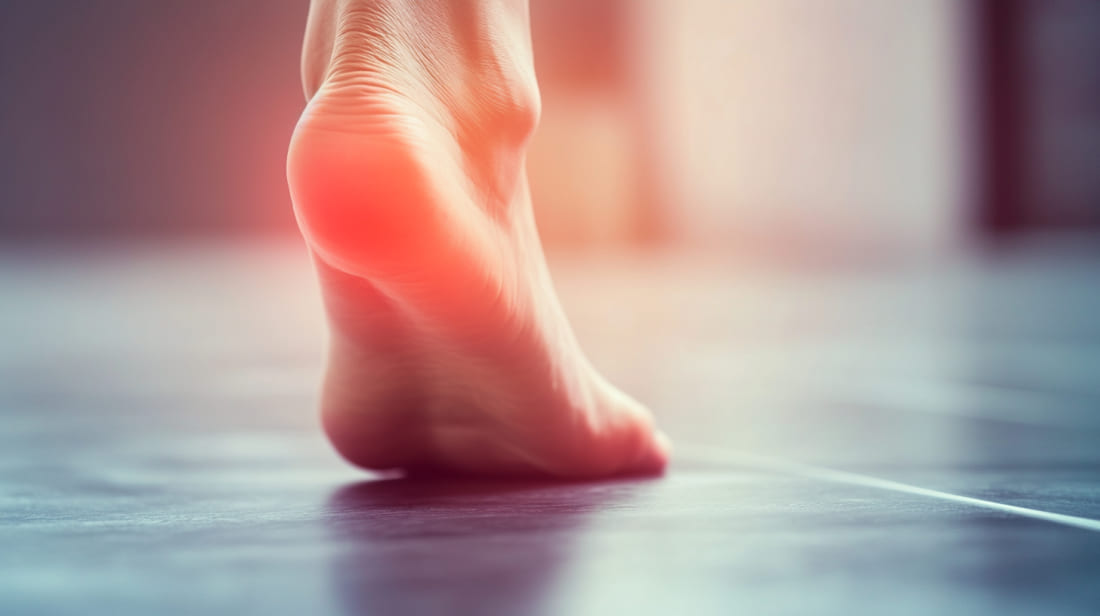
A calcaneal spur is a bony growth on the calcaneus, which is the heel bone. The word plantar means the bottom of the foot, so a plantar calcaneal spur sits on the underside of the heel. A doctor can explain what the spur means for your own heel and whether it is linked to your pain.
Many people first hear the term in an imaging report after a sore heel gets checked. The report names where the spur is. It does not tell you how much it should hurt or what to do next, so ask your doctor to walk you through it.
Plantar fasciitis often comes up in the same conversation. Plantar fasciitis is irritation of the band of tissue along the bottom of the foot. Some Upstep customers tell us they have both a heel spur and plantar fasciitis, and they want to know if the same shoes and orthotics can help with both.
For footwear, the label matters less than the load. The term describes where the spur is. Your shoe choices focus on how much cushioning and support your heel gets with every step.
What to look for in a shoe for heel spurs
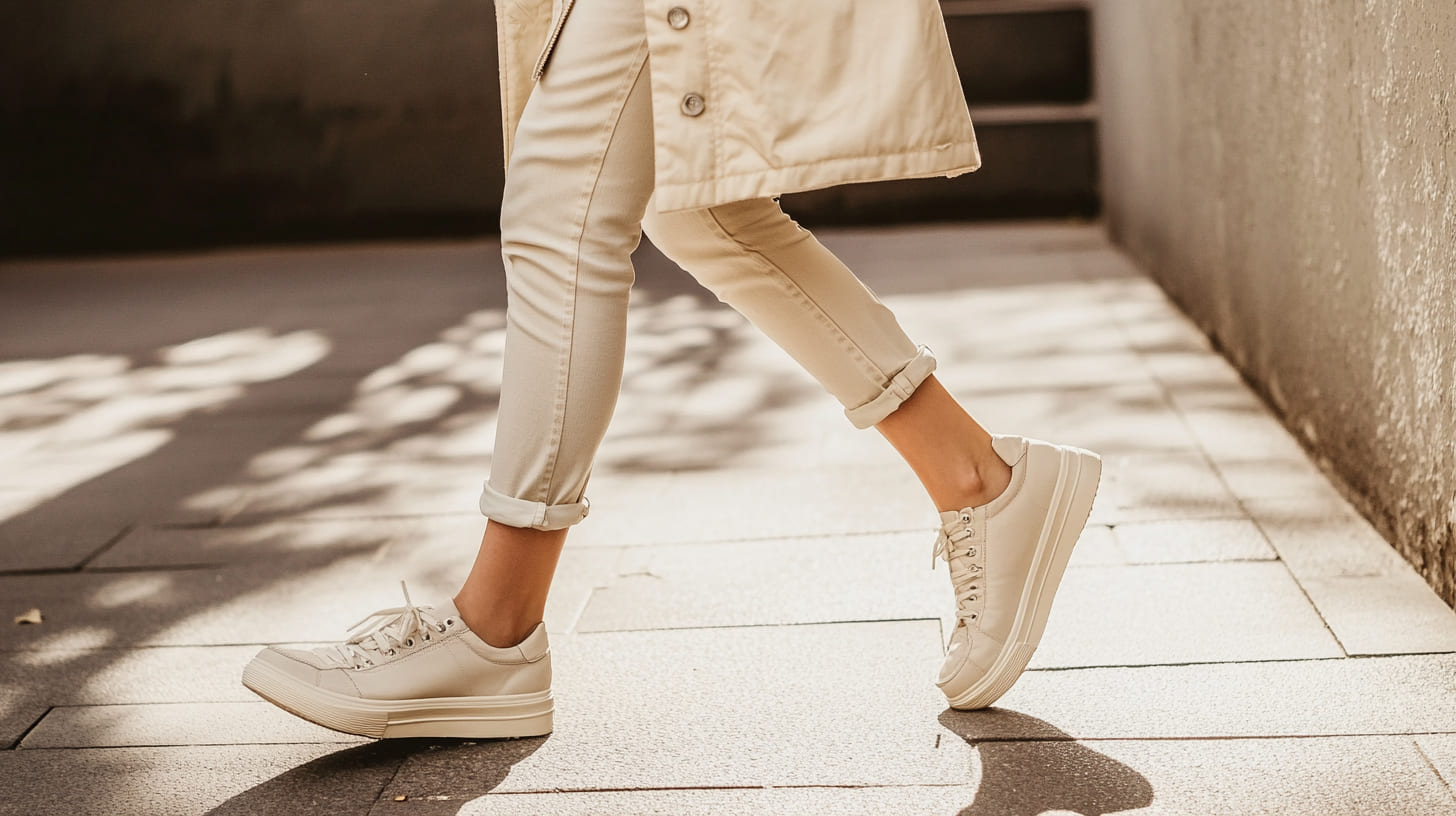
A good shoe for heel spurs has a firm heel counter, a small heel lift, enough cushioning under the heel and a stable midsole that does not twist easily. Supportive running shoes or walking boots are often a better match than flat, soft sneakers.
You can check most of this in the store:
- Squeeze the back of the heel. It should hold its shape, not fold flat.
- Twist the shoe. Hold the heel and toe and twist. A supportive shoe resists. A floppy one wrings like a towel.
- Press the heel padding. You want cushioning that pushes back, not foam that bottoms out.
- Look inside. Check whether the insole lifts out and whether there is room for an orthotic.
Heel counter and heel lift
The heel counter is the stiff cup at the back of the shoe that holds your heel in place. A firm heel counter keeps the heel steady so it lands in the same spot each step. A small heel lift, where the heel sits slightly higher than the forefoot, moves some load off the back of the heel. That lift should be modest. Tall dress heels are a different matter and are best kept for short periods. If you are curious about flat-soled designs, our post on why zero drop shoes may not suit everyone explains the trade-offs.
Cushioning and room for an orthotic
Heel cushioning should feel supportive, not mushy. Very soft foam can feel nice in the store but compress quickly under your weight. A shoe with a removable insole makes it easier to fit an orthotic, because a full-length orthotic replaces the shoe's original insole. Also check heel depth. With the orthotic inside, your heel should sit deep enough that it does not slip up and down as you walk.
Why very flat, soft shoes can be a poor match
Very flat, soft shoes give the heel little structure or lift, so a sore heel can take more of each step. They are not wrong for everyone. But if you have a painful heel spur, very flat, soft shoes are often a poor match for daily wear.
Common examples include:
- Worn-out sneakers with a compressed, uneven heel
- Flip-flops and other thin sandals
- Very soft slip-ons with no heel counter
- A quick switch to barefoot-style shoes
Our guides on the worst shoes for plantar fasciitis and on barefoot shoes and plantar fasciitis go into more detail, and much of that advice applies to a sore heel in general.
To be fair, some people do well in minimal shoes. If you want to try them, change slowly, wear them for short periods at first, and stop if your heel pain gets worse. See a podiatrist if the pain is lasting or keeps building.
How orthotics add foot support for heel spurs
Calcaneal spur orthotics are designed to cushion the heel and support the arch, so pressure is spread more evenly across the foot. Many customers find this helps with comfort when standing and walking. Orthotics do not remove the spur itself, and they are not a medical treatment.
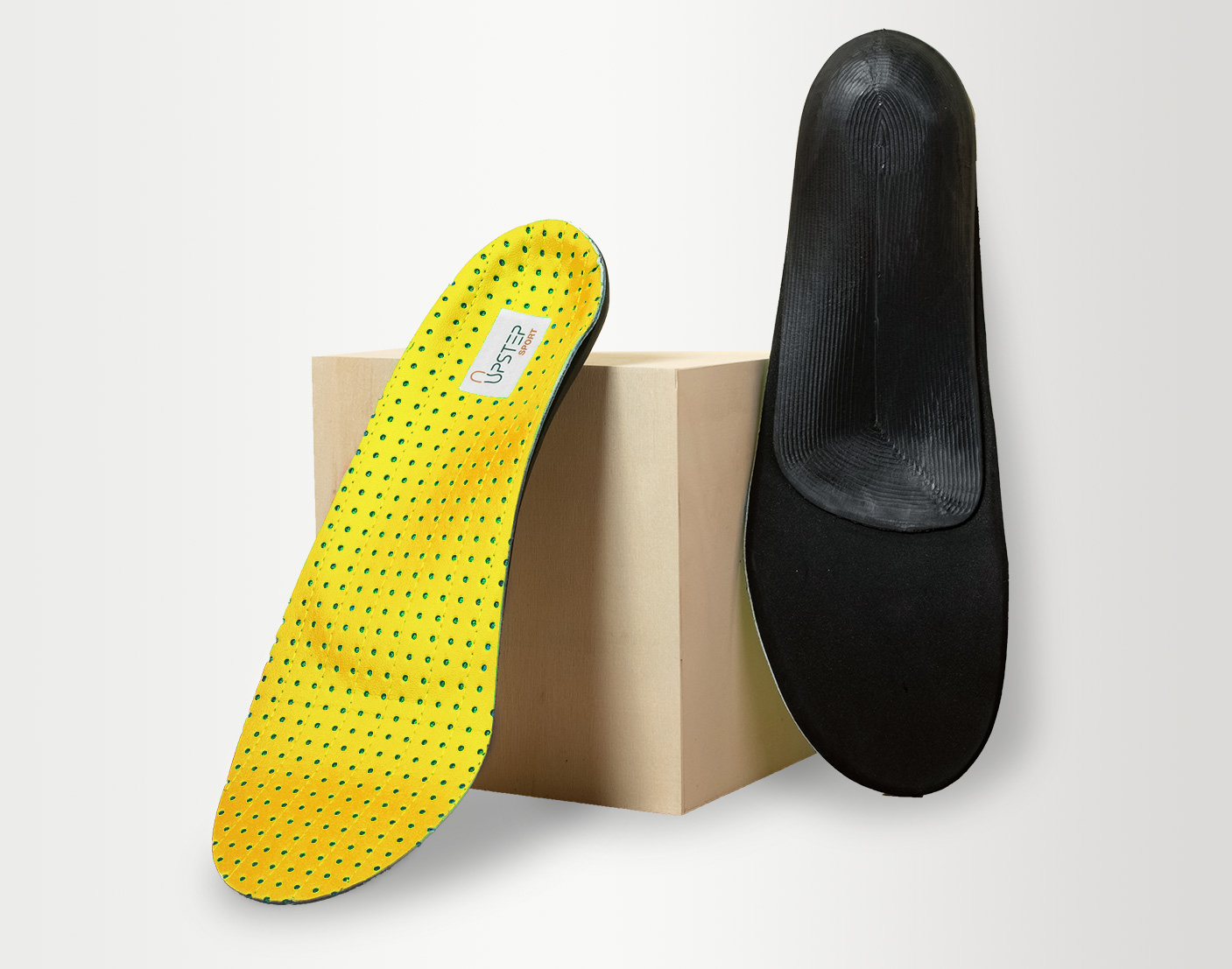
You have two broad choices. Off-the-shelf calcaneal spur insoles come in pre-made shapes and standard sizes. They are easy to find and can be a reasonable first try, especially if your pain is mild. Upstep custom orthotics are made from an impression of your feet and designed around the footwear you plan to wear.
Upstep has two designs that fit heel spur concerns. Upstep Heel Pain Custom Orthotics are built around extra heel cushioning, shock absorption and pressure relief.
Upstep Plantar Fasciitis Custom Orthotics combine targeted heel cushioning, a deep heel cup and arch support. That mix can suit people who have both a heel spur and plantar fasciitis.
Here is how off-the-shelf insoles and Upstep custom orthotics compare on the points heel spur readers ask about most.
| Feature | Off-the-shelf insoles | Upstep custom orthotics |
|---|---|---|
| How they are shaped | Pre-made shapes in standard sizes | Made from an impression of your feet |
| Footwear fit | General shape that may need trimming | Designed around the footwear you name when you order |
| Heel focus | Varies by product | Heel Pain design: extra heel cushioning, shock absorption, pressure relief |
| How fast you get them | Usually available right away | Kit ships in 3-5 business days; orthotics take 12-18 business days after the completed kit arrives |
| Guarantee | Depends on the store | 180-day money-back guarantee |
The takeaway: off-the-shelf insoles are quick and simple to try, while Upstep custom orthotics take longer to arrive but are shaped to your feet and your shoes, with a 180-day guarantee to see how they feel.
Using orthotics in work shoes, walking shoes and hiking boots
Tell Upstep which footwear you will wear when you order, because the orthotic design is matched to that footwear. Work shoes, walking shoes and hiking boots each have different depth, width and stiffness. Matching the orthotic to the shoe helps it fit well and support your heel where you spend the most time.
Work shoes and boots. If you wear boots on the job, Upstep Work Boots Custom Insoles are engineered for work boots with rugged durability and all-day support. If you stand or walk 4+ hours daily in other work shoes, Upstep On My Feet All Day Custom Orthotics offer maximum arch support and suit people like nurses, teachers and retail workers.
Walking shoes. For regular daily activity of 1-4 hours of standing or walking, Upstep Normal Everyday Activity Custom Orthotics are designed for day-to-day comfort.
Hiking boots. Trails add uneven ground, longer days and heavier boots. Our post on common hiking foot injuries covers what to watch for on the trail. Name your hiking boots when you order so the design suits them.
Shoe brands and styles vary a lot. Upstep handles fit for different footwear through design templates, so the key step is simply telling the team what you will wear.
Rotating a second pair
A second pair of Upstep custom orthotics lets you keep one pair in your work shoes and another in your walking shoes or boots, so you are not swapping them every day. Moving one pair between shoes works fine. A second pair saves time and lets you match each pair to its own footwear.
Pricing works by pair within the same order. Your first pair is $239. A second pair in the same order is $144, and each additional pair in the same order is $114.
I have plantar fasciitis and heal spurs.... these inserts have made hiking and walking activities much easier. The process was easy.... they shipped me the foam mold, I followed directions and they created my inserts. They kept me updated during the process and let me know when they were being shipped back to me. I am actually looking at a second pair for rotating in different shoes!Melanie
What Upstep customers with heel spurs tell us
Many Upstep customers with heel spurs ask the same few questions: whether their heel will get better, which exercises help, and whether orthotics and new shoes can help when they have both a spur and plantar fasciitis. Here is how we answer them, and what customers report after wearing their orthotics.
- Will my heel spur get better? Orthotics do not change the spur. What many customers notice is a change in comfort as the heel gets more cushioning and support. A doctor can tell you what to expect for your own heel.
- Which exercises help? Gentle calf and foot stretches are a common starting point. Stop any exercise that sharply increases pain.
- Can orthotics help with plantar fasciitis and a bone spur together? Upstep Plantar Fasciitis Custom Orthotics combine targeted heel cushioning, a deep heel cup and arch support, so they are designed to support both the heel and the arch.
- Should I change my shoes too? Often, yes. A supportive shoe with a small heel lift gives the orthotic a stable base. Flat, soft sneakers tend to work against it.
I’m finally getting long term relief from my plantar fasciitis and heel spur. I would love to buy a second pair. Is there a discount if you purchase more than one pair?Dayna
Everyone's feet are different, and results vary. Some people feel more comfortable fairly soon, while others need more time or a design adjustment. That is why Upstep has an adjustment period and a complimentary redesign option.
How the Upstep impression and fit process works
Upstep ships an impression kit in 3-5 business days, and production and shipping of your orthotics take 12-18 business days after the completed kit arrives back at Upstep. Allow a 21-day adjustment period, because mild soreness in the arch, ankle or calf is common in the first weeks.
- Order and receive your kit. Shipping is free, and the impression kit ships in 3-5 business days.
- Make your impressions. Follow the kit directions to make your foot impressions, then send the kit back with the prepaid label in the box.
- Name your footwear. Tell Upstep which shoes or boots you plan to wear so the design matches them.
- Wait for production. Your orthotics take 12-18 business days after the completed kit arrives.
- Ease in. Use the 21-day adjustment period to build up wearing time.
If an impression can't be used, Upstep's design team sends a replacement kit free of charge before production. During the first weeks, the muscles around the ankle and calves can feel a little sore as they start to work more efficiently, and careful, gradual wear usually settles this. If the orthotics cause significant pain, blisters or skin irritation, you do not need to wait out the 21 days. Contact the team right away.
Upstep custom orthotics come with a 180-day money-back guarantee and one complimentary redesign within the guarantee. If you return a pair that has shipped, a $19 per pair return shipping fee applies per returned pair, and refunds go to the original payment method. The Upstep team handles returns and redesigns directly.
Upstep custom orthotics are HSA/FSA eligible, and Klarna payment plans are available. Upstep does not provide medical necessity paperwork. Once you are wearing them, our guide on how to tell if your orthotics are working helps you check progress.
Other calcaneal spur remedies to pair with footwear
Footwear works best alongside simple habits like gentle calf and foot stretches, easing off activities that flare your heel, and wearing supportive shoes at home. Stop any exercise that sharply increases pain, and ask a doctor or podiatrist about other options for a calcaneal spur.
- Gentle stretches. Calf and foot stretches are easy to fit into your day. Our post on calf stretches for plantar fasciitis walks through several you can do at home.
- Ease back on flare-ups. If long walks or hard floors set off your heel, cut back for a while rather than pushing through.
- Support at home. Walking barefoot on hard floors all evening gives your heel no cushioning. A supportive pair of house shoes can make evenings more comfortable.
A doctor or podiatrist can talk through other options for a calcaneal spur if these steps are not enough. Stop any stretch or exercise that sharply increases heel pain, and see a podiatrist if that keeps happening.
Putting your heel spur plan together
For a sore calcaneal spur, start with a supportive shoe that has a firm heel and a small lift, add an orthotic that cushions the heel, and match your pairs to the shoes you wear most. Keep a doctor in the loop if the heel pain is lasting or getting worse.
- Choose shoes with a firm heel counter, a small heel lift and supportive cushioning.
- Limit very flat, soft shoes, and change to minimal shoes slowly if you try them.
- Add orthotics that cushion the heel and support the arch.
- Match each pair to the footwear it lives in, or rotate a second pair.
- Keep up gentle stretches and support at home.
- See a doctor or podiatrist for any red-flag signs.
At Upstep, we make Upstep custom orthotics from impressions of your feet for the shoes you wear most, with a 180-day guarantee so you have time to see how they feel. For a closer look at one option, read our review of Upstep orthotics for heel pain.