How to get rid of shin splints for good
To get rid of shin splints that keep coming back, rest from the activity that hurts until the pain settles. Then find what set it off: too much training too soon, worn or wrong shoes, or the way your feet move. Change that trigger before you go back, and return gradually.
Shin splints is a common name for aching along the shinbone that builds with repeated impact, like running, jumping or court sports. At Upstep, we hear from many customers whose shin pain came back the very first time they returned to sport after a rest. That pattern is a useful clue. The rest worked, but the cause may still have been waiting.
So how do you get rid of shin splints for good? You treat the flare and the trigger as two separate jobs. Rest handles the flare. Finding the trigger means looking at three things: your training load, your footwear and your foot mechanics. This guide walks through each one, plus a careful plan for going back.
One caveat before you start: shin pain that is sudden, severe or lasting deserves a visit to a doctor or sports medicine clinic first, because other shin problems can feel a lot like shin splints.
Why shin splints come back after rest
Shin splints can come back if rest quiets the pain without changing what caused it. When you return at your old level, in the same shoes and on the same schedule, your legs meet the same stress that hurt them before. Now they may meet it with less conditioning.
The pattern can look like this:
- You take time off and the ache fades.
- You feel fine walking around, so you go back at your old pace, distance or game schedule.
- The pain returns during the first session or the next morning.
Two things can work against you. First, fitness drops during rest, so your old training load is now a bigger jump for your lower legs than it used to be. Second, nothing else has changed. Same shoes, same surface, same schedule can mean the same trigger.
If this sounds familiar, our guide to persistent shin splints looks at more reasons the pain hangs on. And if your shin pain returns every single time, or never fully settles even with rest, that is a reason to get checked rather than simply try again.
When recurring shin pain needs a doctor first
See a doctor, podiatrist or sports medicine clinic before you buy new gear if your shin pain is sharp in one spot, hurts at rest or at night, comes with swelling or numbness, or keeps getting worse. Shin pain that returns again and again after rest also deserves a professional check.
Shin splints is a catch-all name. Other problems in the lower leg can feel similar, and some of them need medical care rather than new shoes. Get checked first if you notice any of these:
- Sharp pain you can point to with one finger on the bone
- Pain at rest, or pain that wakes you at night
- Swelling, numbness or tingling in the leg or foot
- Pain that makes everyday walking hard
- Pain that keeps getting worse instead of better
- Diabetes, or a wound on your foot or leg that won't heal
- Pain that has come back after several rounds of rest
Getting checked first has a practical upside. Once a professional has looked at your legs, any later change in shoes or orthotics is aimed at the right problem. Our guide on when to see a podiatrist covers warning signs in more detail. You can also learn how to test yourself for shin splints at home as a starting point, not as a substitute for a professional opinion.
How to get rid of shin splints fast
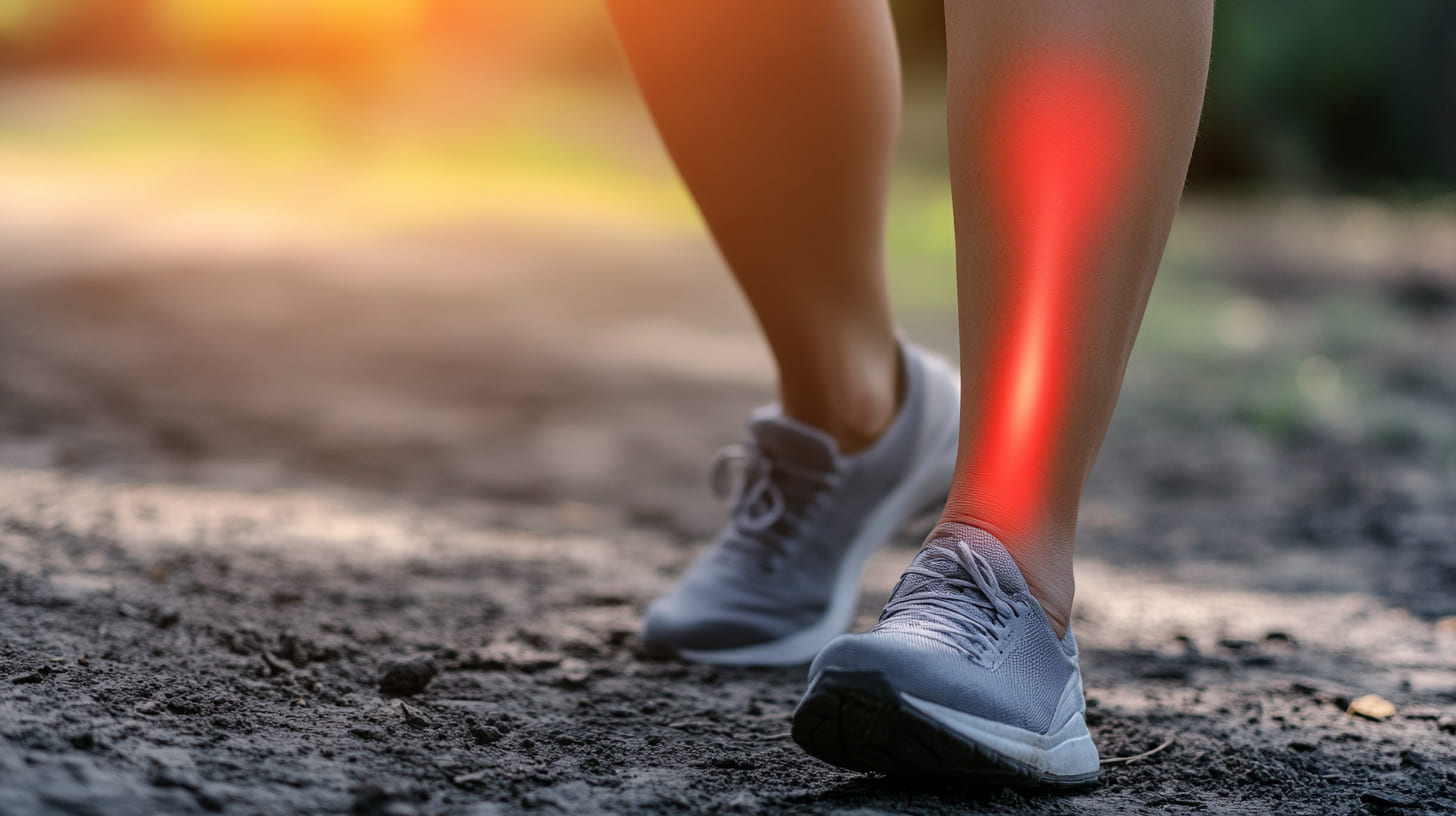
The fastest way to get rid of shin splints is to stop the activity that hurts, ease soreness with cold, and stay active with pain-free, low-impact exercise. Pushing through the pain can slow things down and may make a repeat flare more likely.
If you are wondering how to get rid of shin splints fast before a race or a big game, the honest answer is that there is no safe shortcut. Rushing back too soon can be a reason the pain returns, especially if your legs haven't had time to adapt. Here is what you can do in the short term:
- Stop the activity that hurts. Keep up everyday walking if it feels fine.
- Use cold on the sore area after activity. A wrapped cold pack for a short session can ease soreness. Never put ice straight on bare skin.
- Stay active the gentle way. Swimming, cycling or other low-impact options can keep your fitness up, as long as they are pain-free.
Running through it is not a way to make shin splints go away. If you are asking how can I get rid of shin splints while still training, read can you run with shin splints first. If the pain is not easing with rest, see a doctor rather than waiting it out.
Three places to look for the trigger
To find what keeps setting off your shin splints, look at three things: how much and how fast you train, what shoes you wear and how worn they are, and how your feet move when you walk or run. Repeat flares can trace back to one of these factors, or a mix.
Check them one at a time. If you change your schedule, your shoes and your stride all in the same week, you won't know which change helped or which one caused a new problem.
Training load
Training load is a good first place to look when shin splints return. A quick jump in distance, speed, hills or hard-court time can overwhelm your lower legs, especially right after a rest break.
Look for:
- Sudden jumps in distance, speed, hill work, hard surfaces or game days
- Back-to-back high-impact days with no easier days in between
- The start of a new season, or the first weeks after time off
The answer here is a plan, not a product. Build in small, steady increases instead of going straight back to your old schedule.
Footwear
Footwear matters because worn, poorly matched or newly switched shoes change how impact reaches your shins. Check the wear on your soles and whether your shoes suit your sport and the surface you play on.
- Worn-out shoes lose cushioning and support over time, even if the uppers still look fine.
- Running shoes on a basketball court, or court shoes on the road, may not suit the movement or surface.
- A recent switch to a very different style, such as a much thinner or flatter shoe, changes how your lower legs work.
Turn your shoes over and look for heavy wear on one side. Notice how your shins feel after a session in each pair you own.
Foot mechanics
Foot mechanics, such as feet that roll inward, flat feet or high arches, can change how stress travels up into your shins. If your shoes wear unevenly or your ankles roll in, foot mechanics may be part of the picture.
Overpronation is when the foot rolls inward more than usual as it lands. Flat feet means the arch sits low or flattens when you stand. High arches means the arch stays raised and the foot tends to be more rigid. Each can change how load spreads through the lower leg.
Signs to notice:
- Uneven wear on your shoe soles
- Ankles that roll in when you stand or walk
- Arches that collapse when you stand up
Our guide to overpronation signs and causes goes deeper. If you are unsure what your feet are doing, a professional gait check with a podiatrist or sports medicine clinic can help.
Strength and mobility work that supports your shins
Gentle calf stretches and lower-leg strength exercises can help your legs handle impact better when you return to sport. Start easy, stop anything that sharpens shin pain, and ask a physical therapist for a plan if the pain keeps coming back.
Common parts of a return plan include:
- Calf stretches against a wall, with the knee straight and then slightly bent
- Toe raises to work the calves
- Heel walking to work the muscles along the front of the shin
- Ankle mobility work, such as slow ankle circles
Do these when your shins feel calm, not in the middle of a flare. For step-by-step instructions, see these exercises for shin splints. A physical therapist can tailor a plan to your sport and check your form, which is worth doing if shin pain keeps returning despite rest and careful training.
Going back to sport without a relapse
Go back to sport only when everyday walking is pain-free, then start well below your old level and build up slowly. If shin pain returns during or after a session, stop and rest instead of pushing through.
- Pass the walking test. Everyday walking, stairs and standing should feel normal before you run or play.
- Start low. Begin well below your old distance, pace or minutes on court.
- Build gradually. Add a little at a time, and hold steady for a while if your shins feel tender.
- Mix in low-impact days. Cycling or swimming between impact days gives your legs time to adapt.
- Respect the warning. If pain comes back, stop, rest and drop back a level.
So how can you get rid of shin splints for good? Not by finding the perfect rest period, but by changing the trigger and coming back at a pace your legs can handle. For a week-by-week structure, see our careful return-to-run plan. If shin pain keeps returning even with a slow build, see a doctor or sports medicine clinic.
What Upstep customers tell us about recurring shin pain
Many Upstep customers describe the same pattern: shin pain that settles with rest and returns the first time they go back to running or court sports. The questions they ask most are whether rest alone is enough, whether to train through it, and whether shoes or orthotics play a part.
Here are the questions we hear most often from Upstep customers, as general patterns:
- Can I keep training while my shins hurt?
- Is rest enough, or will the pain just come back?
- Should I use ice or heat?
- Do compression socks help?
- Do I need new shoes?
Most of those answers are in this guide. For more on two of them, see our posts on ice and heat for shin splints and compression socks for shin splints.
One customer, Colin, described the return-to-sport cycle well. To be clear, he says he did not have shin splints, and he had a sports medicine clinic check and an MRI before trying orthotics. But the pattern he describes, rest followed by pain on the first day back, is one many people with recurring shin pain will recognize.
I tried everything to help fix my shin issues that I've had for over a year. I didn't have shin splints and the sports medicine clinic and MRI showed no problems. Some days it hurt to walk. I'd take time off and the first time playing basketball or any activity and I'd be hurt again. Got these orthotics in hopes it would help. After two weeks of wearing these the pain was gone. I'm playing basketball and working out again with no issues. Legit and worked for me.Colin
Colin's experience is one person's story, not a promise. Everyone's feet are different, and what helps one person may not help another.
If you do try Upstep custom orthotics, here is how the process works. You choose the version that fits your activity and take an impression of your feet with the kit we send. The impression kit ships in 3-5 business days, and your orthotics ship in 12-18 business days after your completed kit arrives. Shipping is free.
Expect an adjustment phase. Soreness in the arch, ankle or calf in the first weeks is common as your muscles get used to the new support, which is why there is a 21-day adjustment period. You also have a 180-day money-back guarantee and one complimentary redesign within the guarantee period. A $19 per pair return shipping fee applies to each pair returned for a refund after it has shipped.
Where Upstep custom orthotics fit, and where they don't
Upstep custom orthotics make the most sense when foot mechanics look like part of your trigger and a doctor has ruled out other causes. They are designed to support your feet, not to replace rest, a smarter training plan or medical care for pain that is severe or getting worse.
Be honest with yourself about where you are. Upstep custom orthotics are not a medical treatment. They are not the first step for sharp, sudden, severe or worsening shin pain; see a doctor first. And they don't make up for a training jump that was too big or shoes that have worn out.
The table compares common options by what each one addresses and when it makes sense.
| Option | What it addresses | When it makes sense |
|---|---|---|
| Medical visit | Checks for other causes of shin pain | First, if pain is sharp, sudden, severe, present at rest or getting worse |
| Training changes | Sudden jumps in distance, speed, hills or game days | Almost always, especially after a rest break |
| Strength and mobility work | How well your lower legs handle impact | Once a flare has calmed, as part of your return |
| New shoes | Worn cushioning, or shoes that don't suit your sport | When soles are worn or shoes don't match your sport or surface |
| Upstep custom orthotics | Foot support shaped to your own feet | When foot mechanics look like part of the trigger and other causes are ruled out |
The takeaway: start with your training load, and get a medical check if you have any warning signs. Look at gear after that, so a change in shoes or orthotics targets a trigger you have actually found.
If foot mechanics seem to be part of your picture, Upstep has versions for running and for multiple sports. Your first pair is $239, shipping is free, and Upstep custom orthotics are HSA/FSA eligible. Once you have them, our guide on how to tell if your orthotics are working can help you judge progress. And if shin pain ever turns sharp, sudden or severe, see a doctor.