Should you keep running with shin splints?
You should not keep running through shin splints. Running on a sore shin keeps loading the irritated area, which can turn a short setback into a longer one. The better path is to back off, let symptoms settle, and then return to running slowly, with your symptoms as the guide.
At Upstep, many customers ask us whether shin splints will fade if they just keep running. Our honest answer is no. Reduce the load on the shin first, look at what caused the problem, and then build back up gradually. That order matters more than any single product or trick.
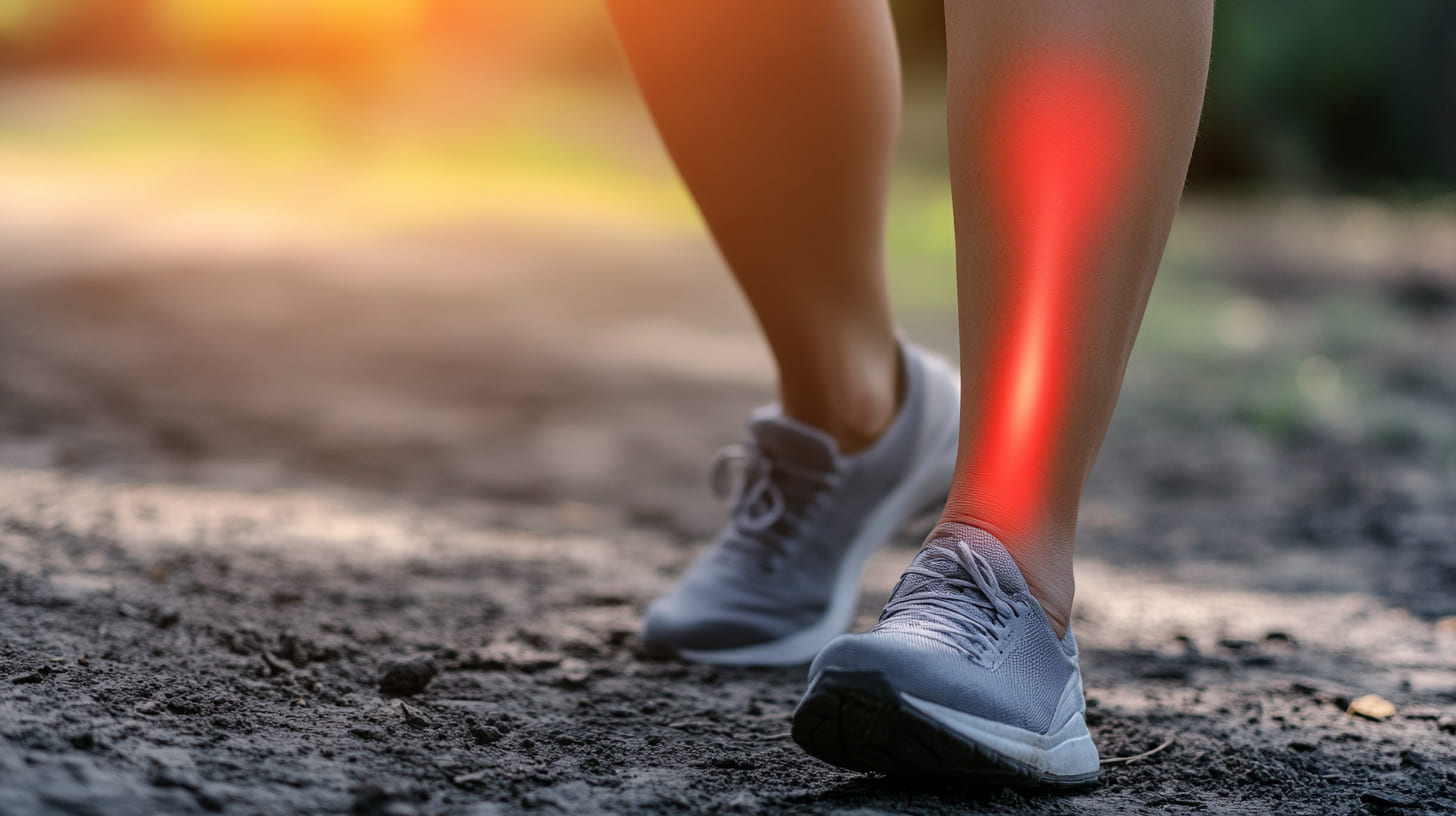
Shin splints are pain along the inner edge of the shinbone, usually linked to repeated impact and doing too much, too soon. People also call them "split shins," a "shin sprain" or a "shin strain." Whatever name you use, the advice in this article is the same.
There is no fixed timeline for coming back. Your symptoms set the pace, not the calendar. If the pain is severe, sudden or lasting, see a doctor or podiatrist before you follow any return-to-run plan. For a shorter answer to this question, read our guide on whether you can run with shin splints.
Signs that mean you should stop and see a doctor
See a doctor or podiatrist before you run again if your shin pain is sudden, severe, getting worse, present at rest or at night, or focused on one very tender spot on the bone. Some shin pain is not a "run less" problem. It is a "see a doctor" problem.
Watch for these red flags:
- Sudden or severe pain
- Pain that keeps getting worse
- Pain at rest or pain that wakes you at night
- One small spot on the bone that is very tender to press
- Swelling in the lower leg
- Numbness or tingling in the leg or foot
- Pain that does not ease with rest
Shin pain does not always come from shin splints. It can come from other problems, including a stress injury to the bone, and those need a proper medical exam. This article cannot tell you what is causing your pain. A doctor or podiatrist can.
Take extra care if you have diabetes or circulation problems. New leg or foot pain, swelling, numbness or a wound that won't heal deserves a prompt medical check. Our guide on when to see a podiatrist covers more warning signs.
Rest comes before any return to running
Before any comeback run, give shin splints a period of relative rest. Stop running, keep up comfortable daily walking and pain-free low-impact activity, and wait until everyday movement no longer hurts. Rest is the first step in most shin splints treatment at home.
Relative rest means you stop the activity that hurts, not that you stop moving. Good options while your shin settles include:
- Daily walking, as long as it is comfortable
- Swimming or pool exercise, if it causes no shin pain
- Easy cycling, if it causes no shin pain
Ice or a cold pack wrapped in a thin towel can help with comfort after activity. Our post on ice and heat therapy for shin splints explains how to use each one.
There is no set number of rest days that fits everyone. You are ready for the first stage of the plan when everyday walking and stairs are pain-free and the shin is no longer tender when you press along the bone. If shin splints pain is not easing with rest, see a doctor or podiatrist instead of pushing on.
A symptom-guided return-to-run plan
A safe return to running after shin splints moves in small stages: pain-free walking, then walk-run intervals, then longer easy runs, and only then speed and hills. Move up a stage only when the current one feels fine during the run and the next morning.
Use the two-check rule. Check your shin during each session, and check it again the next morning. If you feel shin pain at either check, step back to the previous stage and stay there until the shin is quiet again. Mild muscle tiredness is normal. Pain along the shinbone is not.
This table compares the four stages, what each one involves, and when to move forward or back.
| Stage | What you do | Move on when | Step back if |
|---|---|---|---|
| Stage 1: Brisk walking | Walk briskly on flat, even ground in your running shoes | Walking is pain-free during, after and the next morning | The shin hurts during or after walking (see a doctor if this persists) |
| Stage 2: Walk-run intervals | Short, easy jogs mixed with walking breaks, every other day at most | Several sessions feel fine at both checks | The shin aches during the run or the next morning |
| Stage 3: Continuous easy runs | Longer running segments, shorter walks, easy conversational pace | Easy runs feel normal and the shin stays quiet | Shin pain returns at either check |
| Stage 4: Speed, hills, long runs | Add one harder element at a time | Each new element feels fine at both checks | Any shin pain returns; drop back to Stage 3 |
The takeaway: slow and boring beats fast and hurt again. Rushing a stage can cost you far more time than it saves.
Stage 1: Pain-free brisk walking
Stage 1 is brisk walking on flat, even ground in your running shoes. Build up how long you walk over several days. Move on when brisk walking causes no shin pain during the walk, afterward, or the next morning.
Stage 2: Walk-run intervals
Stage 2 mixes short, easy jogs with walking breaks. Keep the running segments short and the pace gentle. Choose soft, flat surfaces such as a track, grass or a smooth trail when you can.
Run every other day at most, so the shin gets a recovery day in between. Step back to Stage 1 if the shin aches during the session or the next morning.
Stage 3: Continuous easy runs
Stage 3 turns intervals into continuous easy runs. Slowly lengthen the running segments and shorten the walks until you can run without stopping at an easy, conversational pace.
Change one thing at a time: how long you run, how often you run, or where you run. Never change all three at once. If your shin flares, you will know what caused it.
Stage 4: Speed, hills and longer runs last
Stage 4 brings back hills, speed work and long runs, one at a time, and only after easy running feels completely normal. Add one harder element, then give your shin a few sessions to respond before you add the next.
Any return of shin pain means dropping back to Stage 3 for a while. That is not failure. It is the plan doing its job.
Strength, form and shoes support your comeback
Strength work, running form and shoes all affect how much load your shins take. Pain-free calf, hip and foot exercises, a slightly shorter stride and shoes that are not worn out can all support a steadier return to running. Rest calms symptoms. These steps look at why the shins got overloaded in the first place.
Simple strength work for runners coming back from shin splints often includes:
- Calf raises, rising slowly onto your toes and lowering with control
- Hip and glute exercises, such as bridges and side-lying leg raises
- Simple foot exercises, such as towel scrunches or gently lifting your arch while keeping your toes relaxed
Do these exercises only when they are pain-free, and stop any exercise that brings back shin pain. Our post on exercises for shin splints walks through more options.
Form: Overstriding means landing with your foot far out in front of your body. A slightly shorter, quicker step is a common cue that may reduce how hard each landing feels. A running coach or physical therapist can watch you run and give feedback that fits your body.
Shoes: Replace running shoes that feel flat or show heavy wear. Avoid sudden big changes in footwear during your comeback, such as switching to a very different shoe style.
If shin splints keep coming back despite rest and a gradual plan, see a physical therapist, doctor or podiatrist to look at the cause. Our article on persistent shin splints covers common reasons they return.
Can shin splints cause knee pain?
Shin pain and knee pain can show up together in runners, because the shin, ankle and knee work as a chain, and favoring a sore shin changes how you move. Knee pain that is sudden, severe, swollen or lasting should be checked by a doctor or podiatrist.
When one part of the lower leg hurts, you may shorten your stride, land differently or push off less on that side without noticing. Those changes can put different stress on the knee. That does not mean shin splints directly cause knee pain, and the two can have separate causes.
See a doctor or podiatrist if your knee swells, locks, feels unstable or gives way, or if the knee pain is sudden or lasting. For more on this link, read shin splints and knee pain: is there a connection?
Timing new Upstep custom orthotics around your comeback
Break in new Upstep custom orthotics during your walking stage, not on your first comeback run. Early soreness in the arch, ankle or calf is common while you adjust, so keeping that adjustment period separate from your return to running makes it much easier to read your shin.
Here is why timing matters. When you start wearing Upstep custom orthotics, the muscles around the ankle and calf can feel a little sore in the first weeks as they start to work differently. If that happens during your first walk-run sessions, you will not know whether you are feeling normal adjustment or returning shin splints.
Upstep custom orthotics are made from an impression of your feet, so they take time to arrive. Plan around these steps:
- You place your order, and the impression kit ships in 3-5 business days.
- You take your foot impression and send the completed kit back with the prepaid label in the box.
- Your Upstep custom orthotics arrive in 12-18 business days after the completed kit arrives.
Do not count on faster delivery. Ordering while you are still in the rest phase gives the process time to run, so your pair can be ready for the walking stage.
Upstep asks customers to wear new orthotics through a 21-day adjustment period before asking for a standard return, because adjusting takes time. Wear your new pair in daily life first and build up gradually. Then bring them on brisk walks. Once they feel normal on walks, take them into your walk-run intervals. That way you get two clear signals instead of one confusing one.
You also have room to get the fit right. Upstep custom orthotics come with a 180-day money-back guarantee and one complimentary redesign within the guarantee period. Our guide on how to tell if your orthotics are working explains what normal adjustment feels like.
Overpronation is when your foot rolls inward more than usual as it lands. If that describes you, the Upstep Pronation Custom Orthotics are designed for motion control and stability support.
What Upstep customers report
Upstep customers who come back to sport after shin or leg trouble often describe a gradual return, and their experiences vary. These reviews show what some customers report. They are not a promise of results, and everyone's feet are different.
Colin had long-running shin trouble. He is clear that a sports medicine clinic found he did not have shin splints, which is a good reminder that shin pain has more than one cause and is worth getting checked.
I tried everything to help fix my shin issues that I've had for over a year. I didn't have shin splints and the sports medicine clinic and MRI showed no problems. Some days it hurt to walk. I'd take time off and the first time playing basketball or any activity and I'd be hurt again. Got these orthotics in hopes it would help. After two weeks of wearing these the pain was gone. I'm playing basketball and working out again with no issues. Legit and worked for me.Colin
Leslie returned to running after a long break from a spine injury, once she got the okay to run again.
I am a runner but stop abruptly due to a fractured spine. 18 months later I was "ok-ed" top start running again. Once I started; I experienced lower back pain for the first time ever while and after the run. That pain is gone with the inserts. I cannot recommend them enoughLeslie
Another question many customers ask is whether Upstep custom orthotics can help with shin pain from exercise that is not running, such as the elliptical. The same steps apply: rule out anything serious with a doctor, ease the load, look at the cause, and treat orthotics as one support among several. For people who train in more than one way, the Upstep Multi-Sports Custom Orthotics are designed for versatile support across activities.
When Upstep custom orthotics are not the right first step
Upstep custom orthotics are not the right first step if you have red-flag symptoms or a possible bone injury. See a doctor first, then treat orthotics as one support alongside rest, a gradual plan and strength work.
Upstep custom orthotics support the foot. They are not a medical treatment, and they do not replace rest, a sensible training plan or strength work. They are one part of the picture, not the whole of it.
A few practical points: Upstep custom orthotics are HSA/FSA eligible. Upstep does not provide medical necessity letters, so check with your plan first if it asks for one.
Once a doctor has ruled out anything serious and you are back to pain-free walking, Upstep custom orthotics designed for running may help with support and comfort as you rebuild. You can read about the Upstep Running Custom Orthotics and see current pricing on the product page. Whatever you choose, let your shin set the pace.