The main types of orthotics
The main types of orthotics are rigid, semi-rigid and soft, grouped by the material they are made from. Orthotics are also grouped by purpose: functional orthotics aim to change how your foot moves, and accommodative orthotics aim to support and cushion your foot without changing how it works.
At Upstep, many customers ask us whether hard or soft orthotics are better. Our honest answer is that it usually depends on the orthotic's shape, the shoe it goes in and what you do all day, more than on the material alone.
An orthotic is a shoe insert shaped to support your foot. This guide walks through the material types, the functional and accommodative split, a side-by-side comparison, why shape matters, how your shoes change the picture and when a podiatrist visit should come first.
The three types of foot orthotics by material
Foot orthotics come in three material types: rigid, semi-rigid and soft. Each type balances firmness and cushioning in a different way. No single material suits every foot or every shoe, so the material is a starting point, not the whole answer.
Material affects how firm an orthotic feels underfoot, how thick it is and which shoes it fits. Everyone's feet are different, so the overall design, and the person designing it, matters as much as the material label.
Rigid orthotics
Rigid orthotics are made from a hard material, such as firm plastic, and flex very little under your weight. Rigid orthotics are built to give firm structure under the foot, especially under the heel and arch.
Rigid orthotics come with trade-offs. They can feel firm while you get used to them, and depending on the design they may take up more room in some shoes. Of the three types, rigid orthotics give the most structure and the least cushioning.
Semi-rigid orthotics
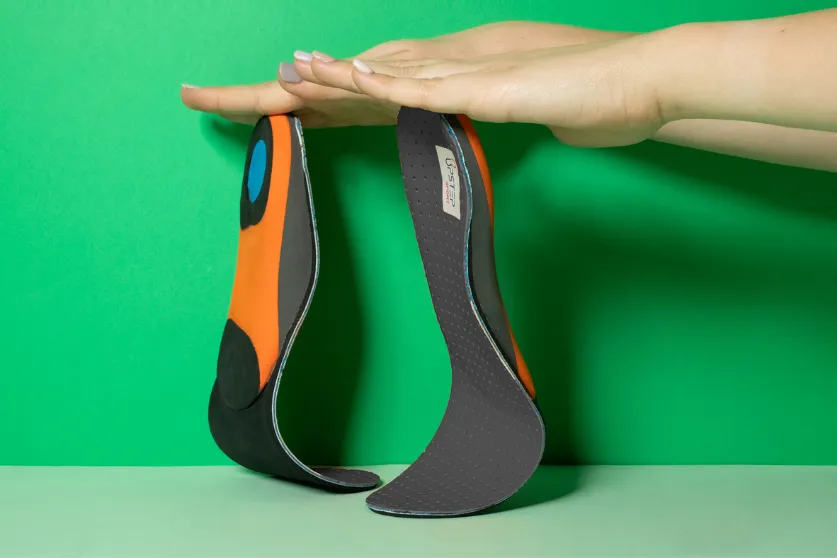
Semi-rigid orthotics pair a supportive shell with softer layers on top. The shell is the firmer base that sits under your heel and arch. The softer top layers add cushioning where your foot meets the shoe.
Semi-rigid orthotics are a middle ground between rigid and soft. They offer some structure under the arch and heel plus comfort on top, which is why semi-rigid orthotics are a common choice for everyday wear and for sports.
Soft orthotics
Soft orthotics are made from flexible, cushioning materials that give under pressure. Soft orthotics focus on comfort and on spreading pressure across the foot rather than firmly guiding how the foot moves. They are often linked with the accommodative approach.
Soft orthotics can add comfort, but they are not a substitute for care. See a doctor or podiatrist if your foot pain is severe, sudden or getting worse, or if it comes with numbness, swelling or a wound that won't heal, or if you have diabetes.
Functional vs. accommodative orthotics
Functional orthotics are designed to change how the foot and ankle move, while accommodative orthotics are designed to support and cushion the foot without changing how it works. The difference between functional and accommodative orthotics is purpose, not material.
Functional orthotics are often used when the way a foot moves may be adding to discomfort. Two common examples are flat feet and high arches. Flat feet means the arch sits low or close to the ground when you stand. High arches sit unusually high and can be prone to rolling outward. A functional orthotic is designed to support a steadier movement pattern with each step. It may help with comfort, but it does not promise to fix the underlying condition.
Accommodative orthotics are designed to support and cushion the foot as it is. The goal is to spread pressure more evenly and protect sensitive areas of the sole, not to change how the foot functions.
The functional and accommodative split is about purpose, not material. A functional orthotic is not always rigid, and an accommodative orthotic is not always soft. Many orthotics blend both goals.
Comparing the types of orthotics
The types of orthotics differ in material, in purpose and in the shoes they fit best. Putting them side by side makes it easier to see which ones line up with your needs.
This table compares the five common types of orthotics by what they are made of, what they focus on and what to keep in mind.
| Type | What it is made of | What it focuses on | Things to keep in mind |
|---|---|---|---|
| Rigid | A hard, firm material such as firm plastic | Firm structure under the heel and arch | Can feel firm at first; may need more room in some shoes |
| Semi-rigid | A supportive shell with softer layers on top | A balance of structure and cushioning | A common middle ground for daily wear and sports |
| Soft | Flexible, cushioning materials | Comfort and spreading pressure | Gives less firm guidance of how the foot moves |
| Functional | Any material; defined by purpose | Changing how the foot and ankle move | Not always rigid; the shape does much of the work |
| Accommodative | Any material; defined by purpose | Support and cushioning without changing foot function | Not always soft |
The takeaway: the right type of orthotic depends on your feet, your shoes and your activity. The firmest option is not automatically the most supportive, and the softest is not automatically the most comfortable.
Why shape matters as much as material
The shape of an orthotic matters as much as its material, because shape guides how your foot moves with each step. At Upstep, our view is that both firmer and softer orthotics can be designed to support your foot well when the shape is right for you.
A common myth, often seen in ads, is that an orthotic pushes a flat foot back into a perfect position and holds it there. Orthotics do not lock a foot into place. In our view, a well-shaped orthotic is designed to support the foot and guide the movements that may be adding to discomfort, step after step.
An orthotic on its own also has limits. Supportive shoes matter. Where a doctor, podiatrist or physical therapist advises it, strengthening and stretching work can go alongside orthotics as part of a wider plan.
Material is one design feature among many. Arch height, heel shape, thickness, length and the top cover all play a part. That is why a skilled design process matters more than simply choosing hard or soft.
Types of orthotics for different shoes and activities
Upstep custom orthotics are designed for your foot and your shoe style, so a pair built for athletic shoes differs from one built for dress shoes. Many Upstep customers ask whether they need more than one pair. The answer depends on how different their shoes are.
These are the questions Upstep customers ask us most about shoes and activities:
- Do I need different orthotics for different shoes?
- Can I move one pair between my shoes?
- What makes a sports pair different from an everyday pair?
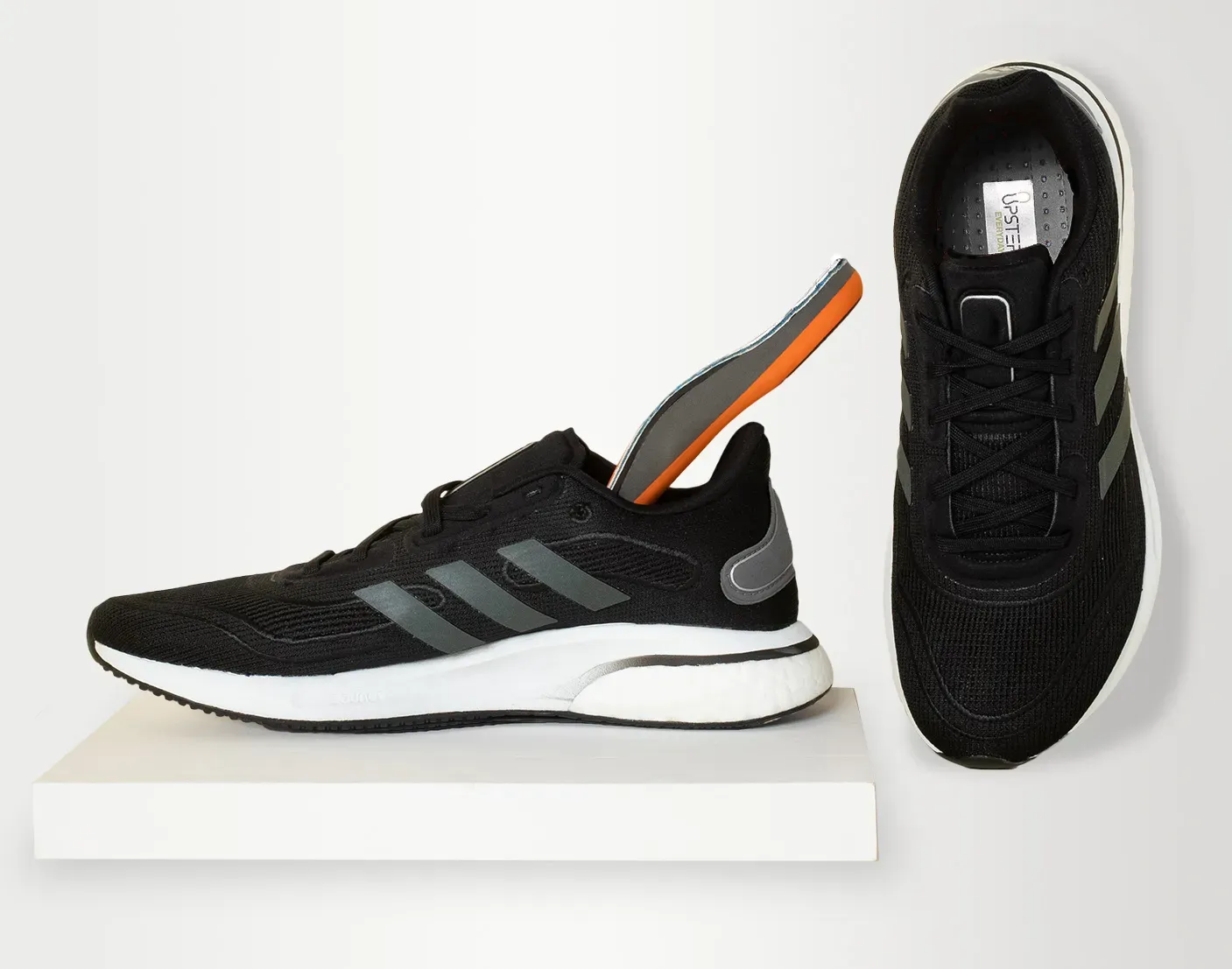
How Upstep builds each pair. The main piece of an Upstep custom orthotic is the shell, which runs from your heel to the end of your arch. A top cover is layered on the shell. Upstep custom orthotics can be made very thin, like dress orthotics, or thicker, like sports orthotics. A design made for an athletic shoe would likely be too thick for a dress shoe. That is why Upstep designs each pair from your foot impression and your shoe style.
Moving a pair between shoes. Upstep custom orthotics can move between similar shoes in the same family, such as one athletic shoe to another or one casual shoe to another. They are not meant to move between very different styles, such as a hiking boot and a dress shoe, because width, heel height and support structure vary. When you move a pair into a new shoe, check that it feels comfortable, since a poor fit can cause rubbing or blisters.
Sports vs. everyday designs. Sports designs focus on dynamic movement, like running, cutting and jumping. Everyday designs focus on less dynamic movement, like walking and standing through the day. The Normal Everyday Activity design, for example, is described for regular activities with 1-4 hours of standing or walking.
Some customers settle the switching question with a second pair, one for each type of shoe. Here is how one customer described it:
Orthotics are very comfortable, supportive and were tailored for my specific issue. They fit perfectly and feel great! I am considering ordering another pair so I don't have to switch these back and forth between shoes.Margaret
If you mostly wear slim, formal shoes, our guide to orthotics for dress shoes covers what fits and what to look for.
Full-length vs. 3/4-length orthotics
Full-length orthotics replace your shoe's removable insole, so the shoe needs an insert that lifts out. A full-length orthotic runs under the ball of the foot and the toes as well as the heel and arch.
3/4-length orthotics sit on top of the existing insole and end before the toes. That makes 3/4-length orthotics a good match for shoes with sewn-in insoles. The length is chosen to fit both the shoe and the area of the foot that needs support.
When to see a podiatrist before buying orthotics
See a podiatrist or doctor before buying any type of orthotic if your foot pain is sudden, severe, worsening or lasting, or if you have numbness, swelling, a wound that won't heal or diabetes. An orthotic can support the foot, but it is not a substitute for an exam.
A podiatrist is a doctor who specializes in the feet and ankles. Orthotics of any type are not the right first step for every problem. Book a visit first if you notice any of these:
- Pain that came on suddenly, is severe, or keeps getting worse
- Pain that has lasted for weeks without easing
- Numbness, tingling or swelling
- A wound or sore on your foot that won't heal
- Diabetes, especially with changes in feeling in your feet
- A recent injury or surgery on your foot, ankle or leg
An exam can rule out problems that need care beyond an orthotic. Our guide on when to see a podiatrist goes through the warning signs in more detail.
One practical note: Upstep does not provide medical necessity paperwork. If your insurance or benefits plan asks for one, your own doctor or podiatrist is the right person to ask.
How to choose the right type of orthotic
Choose an orthotic type by starting with your activity, your shoes and how long you stand or walk each day, rather than by material alone. Expect a few weeks of adjustment with any new orthotic, whatever type you pick.
Work through this short checklist before you buy:
- Your main activity. Running and court sports call for a different design than walking and standing.
- Time on your feet. A few hours a day is different from a full shift on a hard floor.
- The shoes you wear most. Check the style, the room inside and whether the insert lifts out.
- Any condition a clinician has named. Share it, so the design can focus on the area that needs support.
Plan for an adjustment period. Some soreness in the arch, ankle or calf in the first weeks is common while your muscles get used to working a little differently. Build up wearing time gradually. Upstep has a 21-day adjustment period for this reason. If the soreness is sharp, keeps getting worse or comes with numbness or swelling, stop and talk to a podiatrist or doctor. For more on what to watch for, read how to tell if your orthotics are working.
If you want a deeper walkthrough, our guide to choosing the right orthotics for your feet and our look at whether Upstep custom orthotics are worth it can help you weigh your options.
If Upstep custom orthotics sound like a fit, the process starts with a foot impression kit that ships free in 3-5 business days. After your completed kit arrives back, your orthotics are made and shipped in 12-18 business days. Every pair comes with a 180-day money-back guarantee, one complimentary redesign within the guarantee period and an 8-year breakage warranty on the orthotic shell only. Upstep custom orthotics are HSA/FSA eligible, and Klarna payment plans are available. You can see current pricing on the product page.