

How to Massage Plantar Fasciitis: Best Techniques and Tools
Foot massage provides temporary plantar fasciitis relief through hand techniques or tools like tennis balls. For lasting solutions, see a podiatrist about custom orthotics to address the root cause.




Updated October 29, 2025

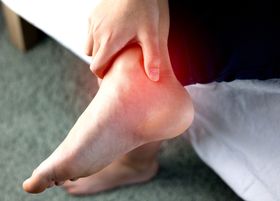
Plantar fasciitis is a common and often debilitating cause of foot and heel pain. It is most noticeable as a sharp, stabbing pain first thing in the morning [1].
While dealing with this condition can be frustrating, the good news is that massage is a simple, effective, and frequently used method to provide temporary pain relief.
If your heel aches when you stand up, a gentle foot massage for plantar fasciitis can calm the fascia and reduce soreness.
» Discover the worst shoes you can wear for plantar fasciitis
Can Foot Massage Help Plantar Fasciitis?
Yes. Massage therapy for plantar fasciitis can provide short-term relief by easing tension in the arch and the heel of the foot. It also improves circulation, and breaks up the adhesions that can form in the plantar fascia [2].
But it's crucial to use the correct method. When done incorrectly, massaging may aggravate the condition and cause a flare-up. Start lightly when you massage heels and increase pressure only if comfortable; too-deep work can aggravate irritated tissue.
» Get an in-depth treatment guide for plantar fasciitis
3 Simple Hand Massage Techniques for Plantar Fasciitis
Since plantar fasciitis pain is often worse in the morning, self-massages can be done before you even step out of bed. It’s also beneficial to massage your feet at night to relieve the stress and tension from the day.
Here are a few hand massage techniques you can use.
1. Stroking/Effleurage to Massage Heel of Foot and Arch

This sequence is an easy way to massage heel pain before you step out of bed:
Sit with one foot resting on the opposite knee in a figure-4 position.
Using the heel of your hand and your thumbs, stroke the underside of your foot from the heel toward your toes.
Cover the entire sole of your foot, from the arch to your toes. You can also use your knuckles, but be sure to adjust the pressure.
Continue for 5-7 minutes on each foot, for a total of two sets per day.
» Learn to relieve your plantar fasciitis using pressure points
2. Kneading the Arch and Plantar Fasciitis Massage Points

Sit with one foot resting on the opposite knee in a figure-4 position.
Using the pad of your thumb, push on the sore points of your sole in a circular, kneading motion.
Knead each point for about 10 seconds, covering the whole foot (including the painless spots), and adjust the pressure to your comfort.
Continue for 5-7 minutes on each foot, for a total of two sets per day.
Work from heel to ball of foot, pausing 10 seconds on tender massage points along the medial arch.
» Heel spurs and plantar fasciitis are similar. Learn to tell the difference
3. Cross-Fiber Massage for Foot Pain (Arch & Heel)

Using the same thumb pressure as the kneading technique, first, massage your foot vertically from heel to toe, covering the full length of your arch.
Then, massage horizontally from side to side, covering the width of your arch.
Continue for 2-5 minutes on each foot, for a total of two sets per day.
Use slow, shallow strokes; the aim is circulation and comfort, not deep tissue work.
» Discover what you shouldn't do if you have plantar fasciitis
Plantar Fasciitis Massage Tools: Ball, Roller, and Heel Massager
Massage tools are a great way to apply more pressure and target specific areas. The most frequently used tools for plantar fasciitis are a ball or a foam roller.
1. Ball Massage Technique

A lacrosse or tennis ball makes it easy to massage heel of foot while controlling pressure:
Sit in a chair or stand with support.
Place a tennis ball, therapy ball, or a frozen water bottle under the sole of your foot.
Slowly and gently roll your foot back and forth from the heel to the toes, applying as much pressure as is bearable.
Continue for 7 minutes, once per day.
» Find out more benefits of rolling your feet
2. Using a Heel Massager / Massage Gun (Go Low & Short)

Massage guns are a newer tool for pain relief and muscle recovery. They can be used for plantar fasciitis, but should be done with caution. Use a low setting and a soft head, and avoid direct pressure on bony areas.
Limit deep tissue massage with a gun to a maximum of 3 minutes, three times per week. Massage can provide temporary relief, but for a long-term solution, consider custom orthotics that address the root cause of your pain.
Limit deep-tissue settings; if you feel throbbing after massage therapy for plantar fasciitis, scale back time and intensity.
Reflexology for Plantar Fasciitis: Is It Worth Trying?
Some people find reflexology relaxing, but evidence for plantar fascia remodeling is limited. If you try it, keep sessions gentle and combine with the massage for foot pain techniques above.
» Check out the 5 best stretches for plantar fasciitis pain relief
When Should You See a Podiatrist?
While massage is a great tool for temporary relief, it doesn’t address the underlying cause of your heel pain. If the pain is persistent and begins to restrict your movement, it is recommended to visit a podiatrist.
They may suggest a pair of custom orthotics for plantar fasciitis, along with other conservative management (such as eccentric stretching), depending on your foot type and individual needs.
A Long-Term Solution for Your Foot Pain
Massage and stretching can soothe the symptoms of plantar fasciitis, but for a long-term solution, it's essential to address the biomechanical issues in your feet that cause the pain.
Upstep’s custom orthotics are expertly designed to correct the root cause of your pain. By using our easy-to-use at-home impression kit, our podiatrists can create a professional-grade, long-term solution designed just for your feet.
Find Your Perfect Relief

Take our personalized quiz, and let us help you find the ideal insoles to keep you comfortable and on your feet all day.
Resources:
- “Plantar fasciitis and bone spurs - OrthoInfo - AAOS.” Available: https://orthoinfo.aaos.org/en/diseases--conditions/plantar-fasciitis-and-bone-spurs/
- L. Juchli, “Effectiveness of Massage Including Proximal Trigger Point Release for Plantar Fasciitis: a Case Report,” Jun. 01, 2021. Available: https://pmc.ncbi.nlm.nih.gov/articles/PMC8133876/
Disclaimer: The information on this blog is for educational purposes only and is not a substitute for professional medical advice. Upstep does not provide medical diagnosis or treatment. While qualified podiatrists create our content, it's essential to consult with your healthcare provider for any foot or ankle concerns you may have.
FAQs
What hormone is released during foot massage?
Foot massage stimulates the release of endorphins and oxytocin, hormones linked to relaxation, pain relief, and well-being.
Does foot massage release toxins?
No scientific evidence supports the idea that massage removes toxins. Its benefits come from improved circulation, relaxation, and reduced muscle tension.
What deficiency causes heel pain?
Heel pain can be linked to vitamin D deficiency, which affects bone health, and sometimes to calcium deficiency.
What is heel pad syndrome?
Heel pad syndrome occurs when the heel’s fat pad becomes thinned or less elastic, reducing cushioning and causing deep, bruise-like pain when walking or standing.