Can you walk with posterior tibial tendonitis?
Yes, you can often keep walking with posterior tibial tendonitis, as long as you stay within limits your tendon tolerates. You find those limits by watching how pain and swelling behave during the walk, afterward and the next morning. If pain is sudden, severe or lasting, see a doctor or podiatrist before you keep walking on it.
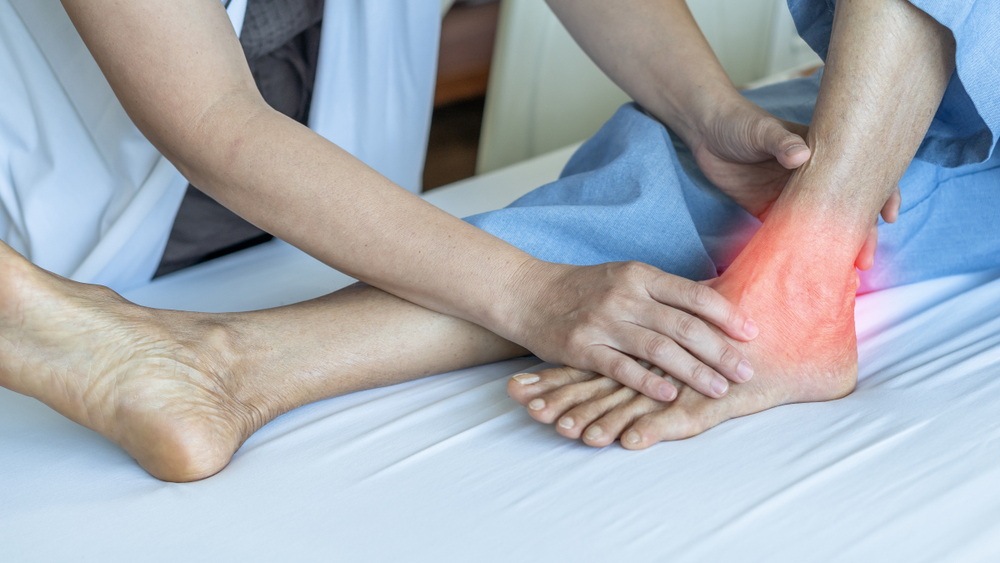
Posterior tibial tendonitis is irritation of the tendon that runs behind the bony bump on the inside of your ankle and helps hold up your arch. At Upstep, we hear from many customers with inner ankle and arch pain who want to know one thing: is walking helping or hurting?
Walking is not all or nothing. How far you walk, the ground you walk on and the shoes you wear matter more than whether you walk at all. A short, flat stroll in supportive shoes asks far less of the tendon than a long hike over hills.
This guide covers how to judge your limits, which surfaces and shoes are easiest, why going barefoot is hard on the tendon, and when to stop and get checked. The advice is general. Your own doctor or podiatrist's plan comes first, and sudden, severe or lasting pain needs a professional look before you keep walking on it.
How to tell if a walk was too much
A walk was too much for your posterior tibial tendon if pain builds as you go, the inner ankle swells more afterward, or the area feels stiffer and sorer the next morning. Mild discomfort that settles by the next day usually means you stayed within limits. Pain that keeps getting worse means cut back and get it checked.
A simple traffic-light check makes the signs easier to read:
- Green: mild, steady discomfort that does not sharpen during the walk and has settled by the next morning. You can usually repeat that walk.
- Yellow: discomfort that builds toward the end or lingers into the evening, but is back to your usual level by morning. Keep the next walk the same or a little shorter.
- Red: pain that turns sharp, makes you limp, changes how you walk, or is worse the next morning. Cut back and rest before trying again.
If the pattern keeps sliding toward red even after you cut back, stop pushing through it and talk to a doctor or podiatrist.
During the walk
During a walk, stop or head home if posterior tibial tendon pain turns sharp, you start to limp, or your arch feels like it is sinking and your foot is rolling inward more than usual.
Plan short loops that keep you close to home, so you can stop at any point without a long trip back. A slow, even pace is kinder to an irritated tendon than speed, because it keeps each step controlled.
After the walk and the next morning
The evening and next morning after a walk tell you the most about posterior tibial tendonitis, because tendon irritation often shows up later rather than in the moment.
- That evening, look at the inside of your ankle and compare it with the other side. New puffiness behind or below the ankle bone is a sign you did too much.
- The next morning, notice your first steps out of bed. If they feel about the same as usual, the walk was likely within limits.
- If you are stiffer or sorer than the day before, take an easier day before you try that walk again.
Surfaces, hills and stairs
For walking with posterior tibial tendonitis, flat, even and slightly forgiving surfaces are usually the easiest place to start. Hills, slopes, uneven trails and stairs ask the post tibialis to work harder to steady your foot, so save them until flat walks feel comfortable. Get any sharp pain on a surface checked by a doctor or podiatrist.
Post tibialis is a common shorthand for the tibialis posterior, the deep calf muscle whose tendon becomes the posterior tibial tendon. Every step on ground that tilts or shifts asks that muscle and tendon to do more steadying work.
The table compares common walking surfaces by what each one asks of the posterior tibial tendon, with a practical tip for each.
| Surface | What it asks of the tendon | Practical tip |
|---|---|---|
| Flat track or smooth path | Steady, predictable steps with little extra balancing | A good place to start and to test a new distance |
| Sidewalk | Mostly even, but hard underfoot, with curbs and cracks | Wear cushioned, supportive shoes and take curb steps with care |
| Grass or trails | Softer, but uneven ground makes the foot work harder to stay stable | Save for later and stick to well-kept paths first |
| Hills and ramps | More push-off going up and more control coming down | Add short, gentle slopes only after flat walks feel easy |
| Stairs | Repeated loading of one foot at a time | Use the handrail and take one step at a time |
The takeaway: start on the flattest, most predictable surface you have, and add one harder surface at a time.
Uneven ground such as grass, gravel or tree roots makes the foot adjust on every step to stay stable. That is good training for a healthy foot, but it can be a lot for an irritated tendon early on.
Stairs load one foot at a time. Use the handrail, take them one step at a time, and keep stair-heavy routes for later. If any surface brings on sharp pain, skip it and mention it to your doctor or podiatrist.
Why going barefoot is hard on the tendon
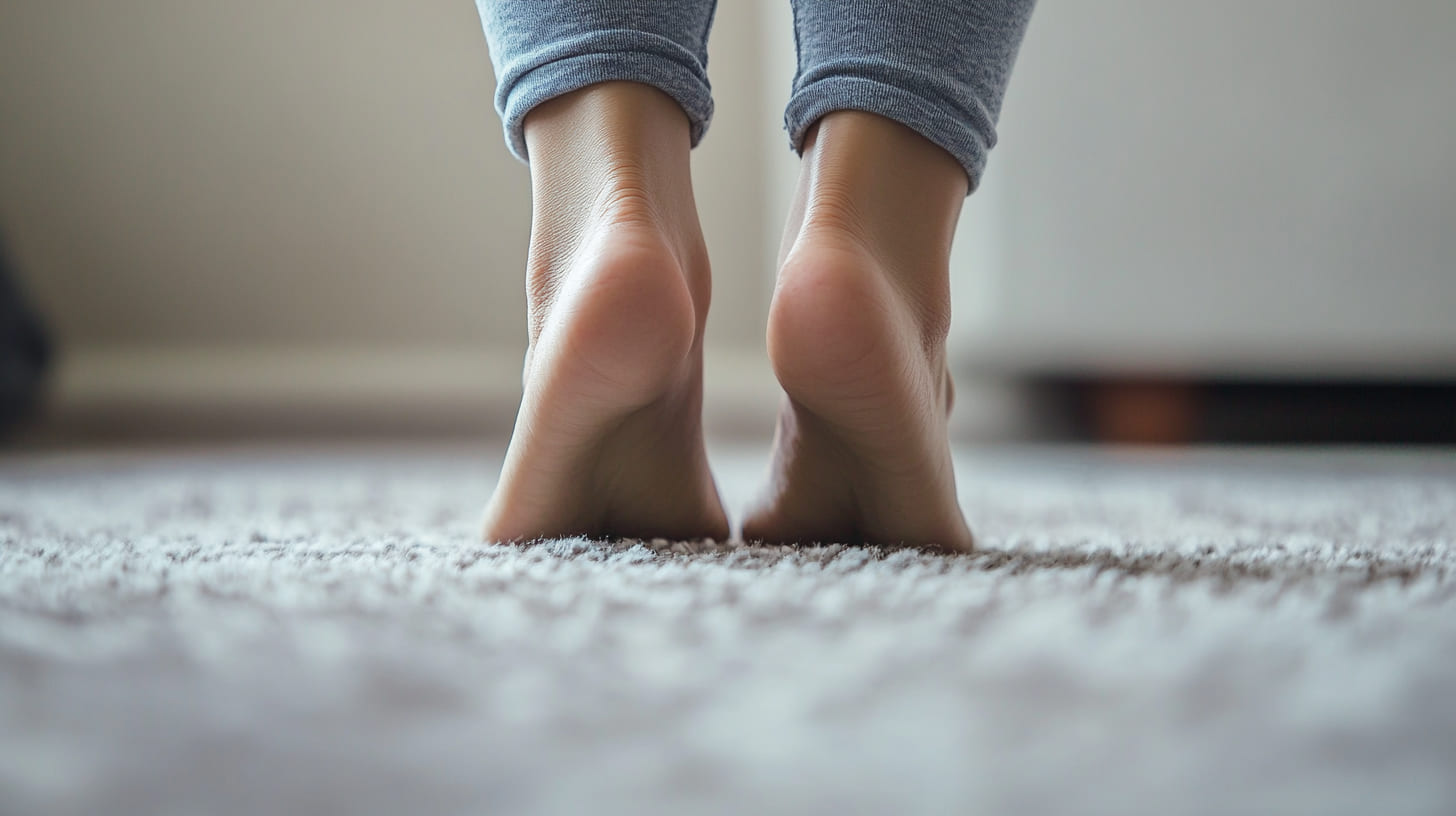
Going barefoot, especially on hard floors at home, leaves your arch with no outside support, so more of the work falls on the posterior tibial tendon with every step. Many people with this kind of tendon pain find supportive shoes indoors more comfortable, though your doctor or podiatrist's plan comes first if it says otherwise.
The posterior tibial tendon runs behind the inner ankle bone and attaches under the middle of the foot. As you walk, the tendon helps lift and steady the arch. When nothing sits under the arch, the tendon handles that job on its own, and hard floors offer no give.
A few easy swaps can help:
- Wear supportive house shoes or a pair of indoor sneakers instead of going barefoot.
- Keep shoes next to the bed so your first steps of the day are supported.
- Limit long stretches of standing barefoot on tile or hardwood, such as while cooking.
- Treat flip-flops and very flat slippers like going barefoot, since they offer little arch support.
If you are curious about minimal footwear, our podiatrist deep dive on whether people with flat feet should wear barefoot shoes covers the trade-offs. This is general comfort advice, so follow your own clinician's plan if it differs.
Shoes and support for walking
Supportive, roomy shoes with a firm heel and a stable base usually make walking with posterior tibial tendonitis more comfortable. Adding arch support can help distribute pressure along the inside of the foot, but it supports comfort rather than treating the tendon, so pair it with advice from a doctor or podiatrist.
When you shop for walking shoes, look for:
- A firm heel counter. The back of the shoe should hold its shape when you squeeze it.
- A stable midsole. The shoe should not twist easily when you wring it like a towel.
- Room for support. Enough depth and width to fit an orthotic without crowding your toes.
- Laces or straps that hold your foot. Your heel should not slide up and out as you walk.
- A wide, stable base. Narrow or very soft soles make the foot work harder to stay steady.
Arch support adds help from underneath. Orthotics that support the inside of the foot can help distribute pressure along the arch, and they usually need roomy, supportive footwear, such as athletic shoes or hiking boots, to fit well.
Upstep custom orthotics are one option. Each pair is made from an impression of your feet. Our Flat Feet Custom Orthotics are designed to provide custom arch support and stability control for flat feet and fallen arches. Our Pronation Custom Orthotics are designed for motion control and stability support for feet that roll inward.
For a wider look at arch support options, read our guide to insoles for posterior tibial tendonitis. Orthotics support comfort; they are not a substitute for a proper medical assessment, so have the tendon checked by a doctor or podiatrist, especially if pain is getting worse.
What Upstep customers ask about walking with tendon pain
Upstep customers with tendon pain most often ask three things: whether to keep walking, which shoes will hold their orthotics, and how long it takes to get used to the support. Soreness in the arch, ankle or calf in the first weeks is common, which is why there is a 21-day adjustment period. Severe or worsening pain should be checked by a doctor first.
Whether to keep walking. Many customers ask this before anything else. Our answer matches this guide: walking within limits is often fine, and the next morning is your best guide. A doctor or podiatrist should set the plan if pain is severe.
Which shoes will hold the orthotics. Roomy, supportive shoes give an orthotic space to sit properly. Tell us the footwear you plan to wear when you order, because Upstep custom orthotics are designed for that footwear.
How the process works. After you order, the impression kit ships in 3-5 business days. Once your completed kit arrives back with us, the design team checks that the impression can be used and sends a replacement kit free of charge if it cannot. Your orthotics then ship in 12-18 business days, and shipping is free.
How long it takes to adjust. Soreness in the arch, ankle or calf in the first weeks is common as your muscles get used to the support. That is why there is a 21-day adjustment period. Start with short walks in your new orthotics and build wear time gradually before harder activity such as running.
What happens if something feels wrong. Within the 180-day guarantee you are entitled to one complimentary redesign, and our design team reviews your experience. If the orthotics cause significant pain, blisters or skin irritation, you do not need to wait out the 21 days before contacting us.
Here is how one customer with a different tendon problem, an Achilles injury, described getting back to walking. This is one person's experience, and he is candid that the wait felt long:
After I damaged my Achilles tendon, I had to stop walking for exercise, and fell into a deep depression. My Upsteps orthotic inserts made it possible for me to walk without pain, and without the risk of re-injury. The only disadvantage to Upsteps is that the production time was so much longer than promised. Accept that you will be in for a long wait, but do order. I’m becoming whole again because of these inserts.Andrew
Everyone's feet are different, and an Achilles injury is not the same as posterior tibial tendonitis. Plan ahead too: Upstep custom orthotics ship 12-18 business days after your completed impression kit arrives, so they are not a same-week answer to a flare-up.
Upstep custom orthotics are also not the right first step when pain is sudden, severe or worsening. Get checked by a doctor or podiatrist first, then consider support once you know what you are dealing with.
When to stop walking and see a doctor or podiatrist
Stop walking and see a doctor or podiatrist if posterior tibial tendon pain is sudden or severe, swelling keeps growing, your arch seems to be flattening, or you struggle to rise onto your toes on that foot. Numbness, a wound that will not heal or diabetes are also reasons to get checked promptly.
Posterior tibial tendon dysfunction is the term for a tendon that struggles to hold up the arch over time, so the foot may gradually flatten. Clinicians describe posterior tibial tendon dysfunction in stages, and how much walking makes sense depends on where you are, so ask your doctor or podiatrist which stage applies to you.
Get seen promptly if you notice:
- Sudden or severe pain along the inside of the ankle or arch
- Swelling that keeps growing instead of settling
- An arch that looks or feels flatter than before
- Trouble rising onto your toes on the sore foot
- Numbness or tingling in the foot
- A wound on the foot that will not heal
- Diabetes along with any new foot pain
Our guide on when to see a podiatrist covers more warning signs. The walking advice in this article is general, and a clinician's plan always comes first.
Walking as part of posterior tibial tendonitis treatment
Walking is one part of posterior tibial tendonitis treatment, not the whole plan. Your doctor, podiatrist or physical therapist can tell you how much walking fits your situation and what else belongs alongside it, and their advice should come before any general guide.
Questions worth asking at your appointment:
- How much walking fits my situation right now?
- Are there surfaces or activities I should avoid for now?
- What shoes or arch support do you suggest?
- Which exercises belong in my plan?
- Which signs mean I should back off or come back sooner?
For background, our overview of posterior tibial tendonitis symptoms, causes and treatments explains the condition in more depth, and our guide to exercises for posterior tibial tendonitis shows moves you can discuss with your clinician. If you are wondering about timing, see how long it takes to recover from posterior tibial tendonitis. Follow your clinician over any general guide, including this one.
A simple way to build walking back up
To build walking back up with posterior tibial tendonitis, start with short, flat walks, change only one thing at a time, and use the next-morning check before adding more. If pain keeps coming back as you progress, step back and see a doctor or podiatrist.
- Start short and flat. Pick a walk you are confident your tendon tolerates, on even ground, in supportive shoes.
- Change one thing at a time. Add a little distance, or a new surface, or new shoes, but not all at once, so you know what caused any flare.
- Add distance before difficulty. Get comfortable with longer flat walks before you add hills, ramps or stairs.
- Leave easier days in between. Follow a longer walk with a shorter walk or a rest day, and use the next-morning check.
- Step back when symptoms flare. Return to the last level that felt fine and stay there for a while before trying again.
Progress with posterior tibial tendonitis is rarely a straight line. If pain keeps coming back each time you build up, step back and see a doctor or podiatrist rather than pushing through.
The short version
You can often keep walking with posterior tibial tendonitis if you stay within limits, start on flat ground, wear supportive shoes and let the next morning guide you. Sudden, severe or worsening pain is a reason to stop and see a doctor or podiatrist.
- Judge each walk by pain and swelling during it, that evening and the next morning.
- Start with flat surfaces and supportive shoes; add hills, stairs and uneven paths later.
- Wear supportive shoes at home instead of going barefoot on hard floors.
- Build up slowly and change one thing at a time.
If you want support for the inside of your foot, Upstep custom orthotics are designed to support the arch, with a 21-day adjustment period, one complimentary redesign and a 180-day money-back guarantee. They are HSA/FSA eligible, and you can see current pricing on the Flat Feet Custom Orthotics page.
Whatever support you choose, a doctor or podiatrist comes first if your arch is flattening, swelling keeps growing, or you notice numbness, a wound that will not heal, or new foot pain alongside diabetes.