

A PT’s Opinion on the Best Footwear and Insoles for Flat Feet




Updated November 20, 2025

Flat feet is a common foot disorder where the entire sole is in contact with the ground while standing or walking. It's a complex deformity with varying types and stages depending on the degree of symptoms and associated disability. It can also be acquired in adulthood.
There are two types of flat feet:
- Flexible flat feet: the foot arch is normal at rest but disappears when weight is placed onto the foot. This is often discovered in childhood.
- Rigid flat feet: the foot shows no arch whether sitting or standing. The result is a complete flattening of the arch and an inward roll of the ankle.
The Best Shoes for Flat Feet
Supportive Soles
A shoe with a firm, flexible, but cushioned sole will do wonders for flat feet. Such a shoe should move with the soles of your feet at all times, providing sustained support throughout the gait cycle. For this reason, sandals and flip-flops are not ideal for flat feet.
It's even better if it's elevated around the midsole to support the arch. This arch support will help maintain the foot in alignment and preserve the integrity of the kinetic chain, limiting the chances of injury.
Insoles for barefoot shoes can provide support to your feet without compromising the comfort found in barefoot shoes. The insoles are flexible and mold to the contours of your feet, improving overall comfort by lessening the impact of your foot on the ground.
Elevated Heel
Apart from a supportive sole, an elevated heel is an added advantage. A heel height of between one or two inches will take pressure off the middle of the foot and bring relief to foot pain. This is applicable for both dress and athletic shoes.
Lace-Ups
Having straps or laces helps you adjust the upper part of the shoe to fit your foot structure and shape, thereby ensuring the even distribution of your weight in the sole.
Laced shoes with firm, supportive, and cushioned insoles are best for use with flat feet. With flat feet, your foot tends to move more against the heel of the shoe due to your foot shape.
This can be mitigated by re-threading the laces back between the first and second eyelets to secure the top of your foot. Make sure the laces are tightened adequately.

The Best Orthotic Insoles for Flat Feet
Why Custom Orthotics are Essential for Flat Feet
Custom orthotic insoles are essential for correcting flat feet deformity and preventing the complications that arise from improper foot alignment.
While supportive shoes provide a foundation, they cannot address the specific biomechanical abnormalities your flat feet create. Generic insoles offer cushioning but fail to correct the root structural issues causing your symptoms.
How Flat Feet Affect Your Entire Body
Flat feet alter your entire kinetic chain. When your arch collapses, your ankle rolls inward excessively (overpronation), your knee tracks improperly, and your hip alignment shifts to compensate [1].
This cascading effect leads to pain not just in your feet, but throughout your lower body. Generic arch support in predetermined heights cannot address these complex biomechanical relationships. Custom orthotics correct your specific structural abnormalities.
A recent study by Sharath Hullumani Vtudy and Purusotham Chippala suggests that walking barefoot is effective in dealing with flat feet in school children as it ensures the even distribution of the body weight across the feet. However, this is not recommended for adults with flat feet [2].
Generic vs. Custom Orthotics
The distinction between generic and custom orthotics matters significantly for flat feet. Generic insoles provide a standardized arch that may be too high (creating painful pressure points), too low (providing inadequate support), or positioned incorrectly for your foot structure.
Custom orthotics are engineered based on your exact foot shape, arch position, and degree of pronation. This precision determines whether the orthotic successfully corrects your alignment or merely adds uncomfortable bulk to your shoes.
How Custom Orthotics Work for Flat Feet
Upstep provides custom orthotics designed specifically for flat feet and the various conditions and activities affected by this deformity. The best orthotic insole is custom-made and designed to fit its intended user.
Typically, custom insoles for flat feet include arch support, a heel wedge, and a metatarsal bar strategically positioned for your foot structure.
The arch support is built into the insole to support your inner foot arch at the precise height and position your foot requires. The heel wedge is an extra thickness on the inner part of the heel to limit its forward movement and control pronation.
The metatarsal bar takes pressure off your metatarsal heads, which experience excessive stress when your arch collapses. A flat foot insole will not permanently correct your flat foot deformity, but it will prevent complications and limit the adverse effects of foot malalignment on your entire body.
Choosing the right support for your flat feet type:
If you have rigid flat feet, a low arch insole with firm arch support will provide appropriate correction. However, if you have flexible flat feet, a medium arch insole with firm arch support will better support your foot.
This distinction matters because the correction strategy differs based on whether your foot maintains some arch flexibility or has completely rigid flattening.
Additionally, orthotic insoles can help cushion your feet during sport and exercise, making both more bearable and reducing instances of flat feet pain. Insoles can be particularly useful for weightlifters with flat feet, as they're often putting immense pressure on their feet. Moreover, basketball and cycling shoe insoles, can also be highly beneficial to athletes, as such activities can be incredibly strenuous on flat feet.
» Give your feet extra support with the best insoles for flat feet
Upstep Flat Feet Custom Orthotics
Upstep represents the definitive solution for flat feet correction because custom orthotics address the root biomechanical cause rather than simply providing generic cushioning.
While over-the-counter insoles force your feet to adapt to predetermined shapes, Upstep's podiatrist-designed orthotics adapt to your unique foot structure, providing the precise correction your flat feet require to prevent pain and complications throughout your entire body.

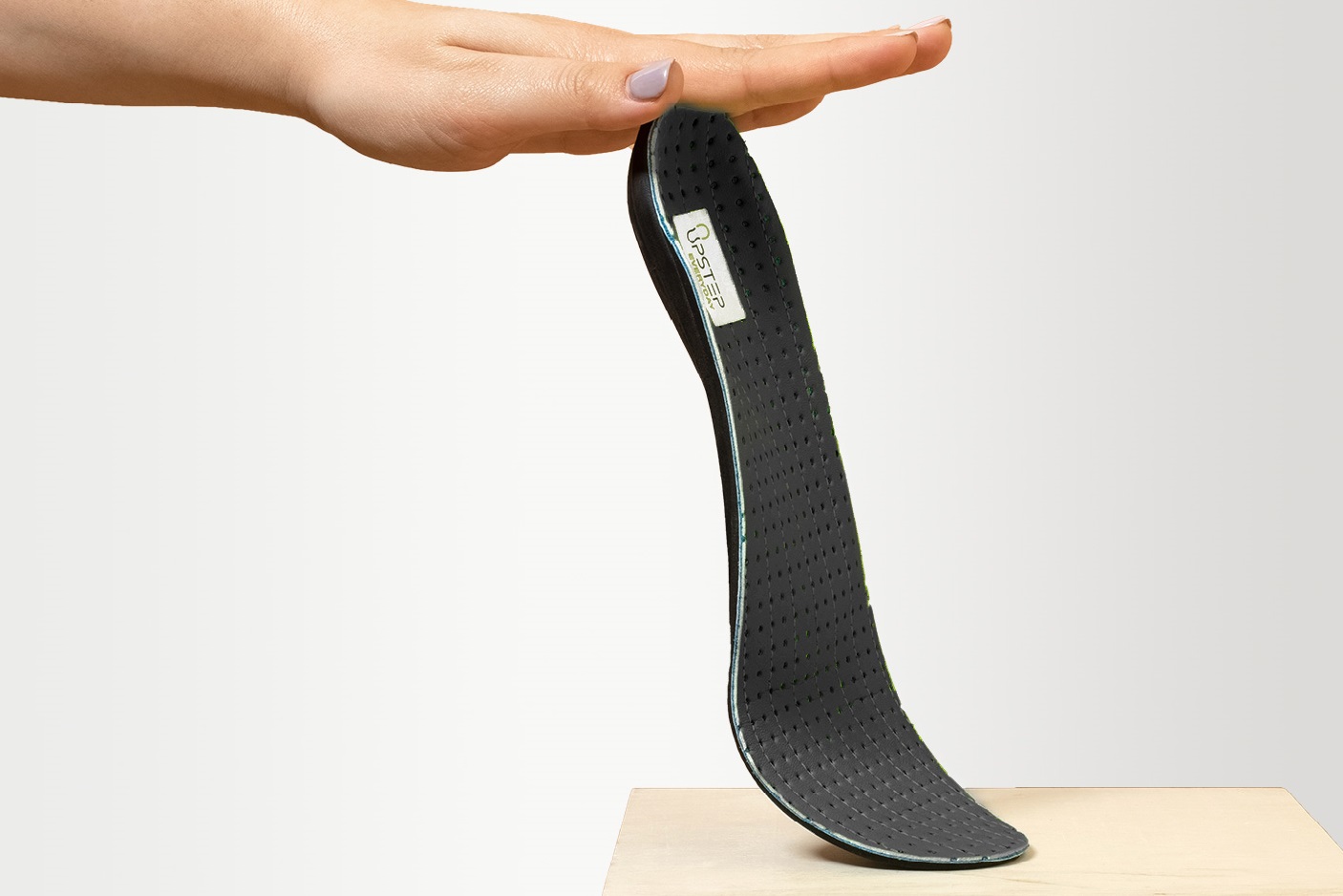
Custom orthotics to suit your needs
Buy NowCustom made
-
Designed based on molds of your feet
Affordable
-
FSA, HSA & Klarna eligible
Return policy
-
180-day money-back guarantee
Shipping
-
Free shipping in the US
Upstep Custom Orthotics are designed to prevent and relieve pain and reduce fatigue. Tailored to your unique foot shape by experienced podiatrists, these insoles promote natural foot alignment, enhance shock absorption, and stabilize your feet during walking, helping to reduce the risk of injury.
Crafted with high-quality, durable materials, Upstep orthotics provide targeted support and cushioning to alleviate discomfort and support healthy movement. They are built for comfort, making them ideal for daily activities.
Upstep insoles are affordable, eligible for FSA and HSA, and offer interest-free payments through Klarna. They include free shipping, a 180-day money-back guarantee, and free remakes.
Orders are fulfilled quickly by a large, skilled team, serving the most customers among online brands, with customer service backed by over 14,000 5-star reviews.
Final Verdict
Flat feet require precise biomechanical correction, not generic cushioning. Custom orthotics engineered for your specific foot structure correct the alignment issues causing pain throughout your body, while over-the-counter insoles simply cannot provide this level of precision.
Upstep's podiatrist-designed orthotics address your unique flat feet presentation, whether flexible or rigid, with targeted arch support, heel stabilization, and pressure redistribution. With a 180-day money-back guarantee, free remakes, and FSA/HSA eligibility, choosing the clinically-proven solution over generic alternatives carries zero risk. Your feet deserve correction, not compromise.
Want to determine the best insole for you?
References
Overpronation. (2025, September 24). Cleveland Clinic. https://my.clevelandclinic.org/health/diseases/22474-overpronation
Hullumani, S., & Chippala, P. (2020, December). Effects of barefoot walking on the flat foot in school going children: A Randomised control trial. ResearchGate. https://www.researchgate.net/publication/350066781_Effects_of_barefoot_walking_on_the_flat_foot_in_school_going_children_A_Randomised_control_trial
Disclaimer: The information on this blog is for educational purposes only and is not a substitute for professional medical advice. Upstep does not provide medical diagnosis or treatment. While qualified podiatrists create our content, it's essential to consult with your healthcare provider for any foot or ankle concerns you may have.
FAQs
Can custom orthotics actually fix flat feet?
Custom orthotics cannot permanently restructure your foot anatomy, but they effectively correct the biomechanical dysfunction flat feet cause. They support your arch in proper position, prevent excessive pronation, and maintain correct alignment throughout your kinetic chain. This prevents complications, eliminates pain, and stops cascading effects on your ankles, knees, and hips. You'll need to continue wearing them to maintain benefits, but the relief and injury prevention are substantial and clinically proven.
How are Upstep custom orthotics different from Dr. Scholl's inserts?
Dr. Scholl's provides generic cushioning in predetermined arch heights that cannot address your specific biomechanical needs. Upstep custom orthotics are designed by podiatrists based on precise measurements of your foot structure, arch position, and pronation patterns. Dr. Scholl's offers temporary comfort but fails to correct alignment issues. Custom orthotics provide the biomechanical correction necessary to prevent complications and eliminate pain. The difference is clinical-grade treatment versus basic cushioning.
Will Upstep orthotics work in all my shoes?
Upstep orthotics work best in laced shoes with removable insoles and adequate volume—athletic shoes, work boots, and casual sneakers. Dress shoes with limited space, high heels, and minimalist footwear may not provide enough room. Specify your primary shoe type when ordering so podiatrists can design appropriate thickness and length. Most customers order multiple pairs for different shoe categories. The 180-day guarantee allows you to test fit across your shoe collection and request adjustments if needed.
How long does it take to feel relief from flat feet pain?
Most users experience noticeable improvement within 1-2 weeks of consistent wear. Your feet need an adjustment period as they adapt to proper alignment. Start wearing the orthotics 2-3 hours daily, gradually increasing over 2 weeks until you're wearing them all day. Significant pain reduction typically occurs within 3-4 weeks. Secondary pain in knees, hips, and lower back often takes 4-6 weeks to resolve as your entire kinetic chain adjusts.