


Strength in the lower leg muscles is extremely important in maintaining biomechanical alignment of the foot and ankle complex during high-impact activities such as running or jumping.
The muscles provide an active stabilization system for the ankle complex as weight is applied to the joint. Weakened muscles that fatigue quickly may be the reason why your ankle hurts.
They can lead to ankle injuries, fractures, or ankle pain during daily activities. The ankle cannot cope with sudden stressors and is prone to developing pain in the long term.
» Learn about the best shoes for a sprained ankle
Benefits of Ankle Strengthening Exercises
The main benefit of ankle strengthening exercises is that there will be less pressure placed on the ankle joint when weight is applied.
You can improve your ankle joint by doing exercises that protect the joint and limit the potential for osteoarthritis and ankle arthritis from developing. Leg strengthening improes leg bone density and balance.
» Discover the different types of ankle sprains
13 Ankle Strengthening Exercises and Stretches
1. Toe Lift
Sets: 3
Repetition: 15
Step 1: Sit straight in a chair with your feet slightly apart, keeping your heel on the ground.
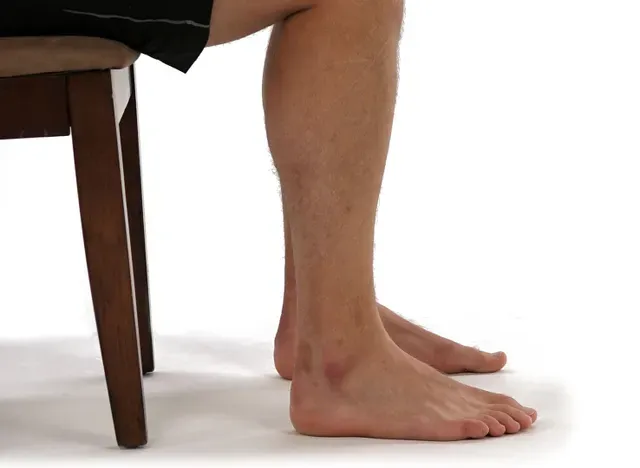
Step 2: lift your forefoot up as high as you can without pain. Return to the initial position.
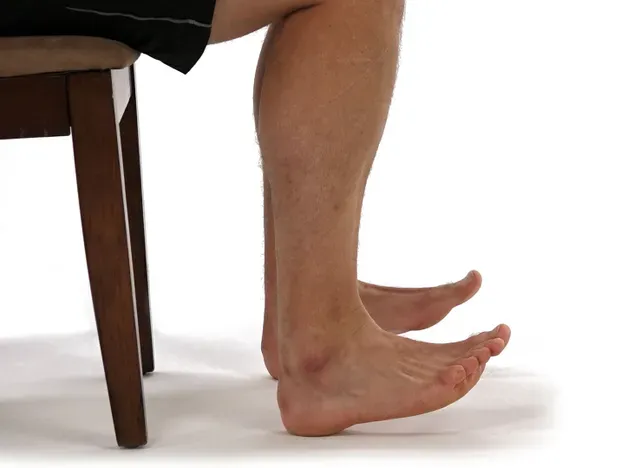
Benefits:
- It strengthens the ankle because it improves the flexibility and mobility of the joint.
- It also prevents the development of adaptive muscle shortening, contractures, and capsule shortening, ligaments, and tendons.
- It reduces stress on other joints and connective tissues, potentially lowering the risk of injuries such as plantar fasciitis and Achilles tendinotis.
» Check out the difference between Achilles tendinopathy and tendonitis
2. Outward Ankle Movement
Sets: 3
Repetition: 15
Step 1: Lie on your back. Bring your forefeet up and big toes towards each other.
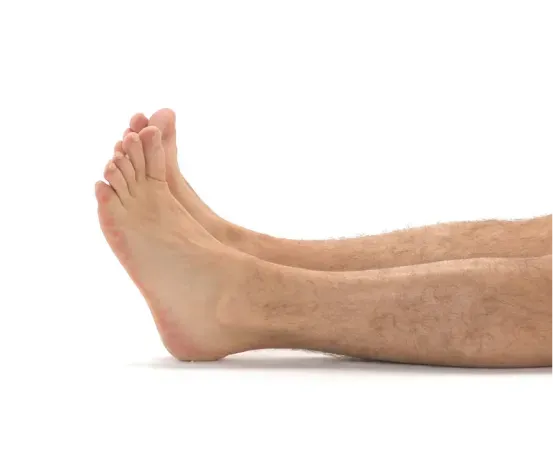
Step 2: Bring your forefeet up and big toes away from each other. Return your feet to the midline.
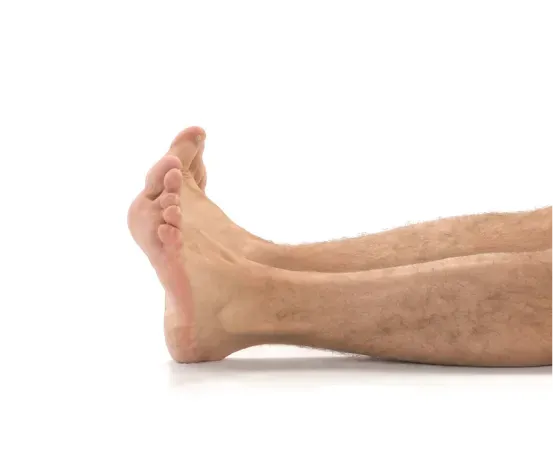
Benefits:
- It enhances ankle stability, reducing the risk of sprains and strains by enabling the joint to better resist inward rolling movements.
- It improves balance and coordination, which is crucial for daily activities and athletic performance.
» Find out the most common causes of ankle pain while walking
3. Inward Ankle Movement
Sets: 3
Repetitions: 15
Step 1: Sit in a chair and have your foot at the body's midline.
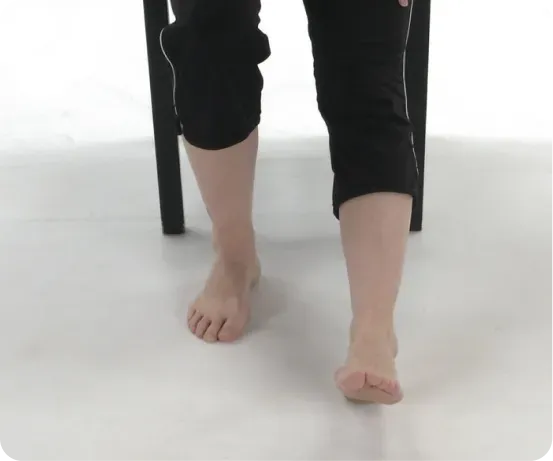
Step 2: Move your foot towards the midline. Return and repeat.
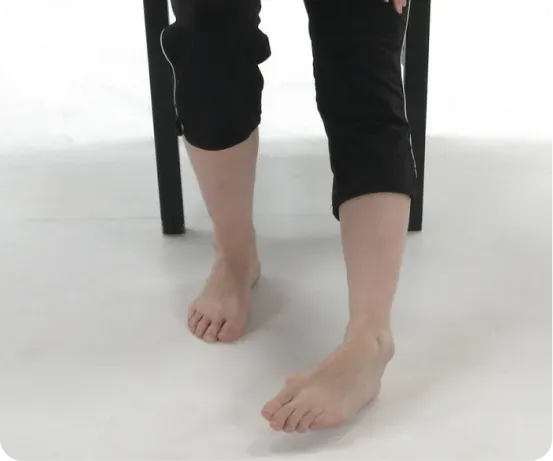
Benefits:
- It targets key muscles like the tibialis posterior, enhancing medial support and overall joint stability.
- It prevents common injuries such as ankle sprains by improving the ankle's ability to resist excessive outward rolling.
- It improves balance and proprioception, aiding in faster ankle sprrain recovery and reducing the likelihood of future injuries.
4. Outward Ankle Rotation Resistance
Sets: 3
Repetitions: 15
Step 1: Lay down and tie the elastic on stable furniture. Tie the elastic around your feet.
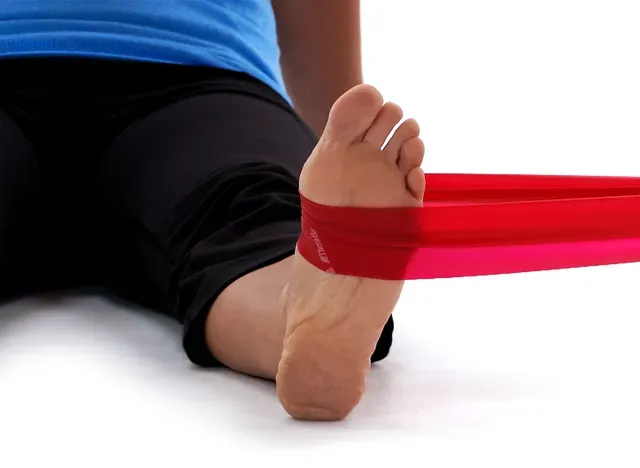
Step 2: Push down against the elastic with your forefoot. Return to the initial position and repeat.
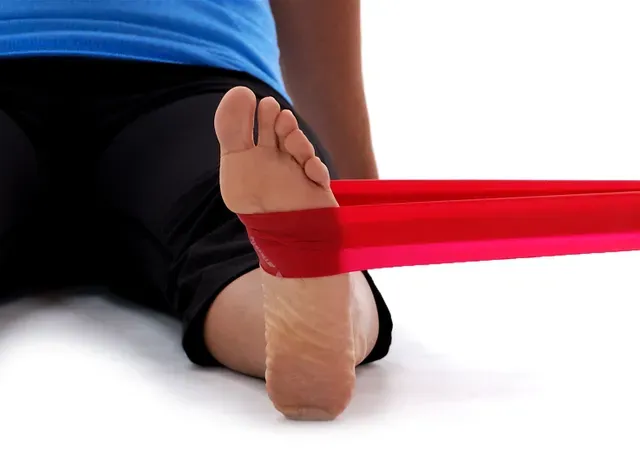
Benefits:
- It strengthens muscles responsible for foot supination enhances ankle stability, reducing the risk of injuries such as sprains.
- It can correct gait patterns and alleviate stress on the knee, hip, and back associated with improper foot positioning.
- It supports proper foot alignment, contributing to better balance and overall foot health.
5. Side Shuffle
Sets: 3
Repetitions: 10
Step 1: Stand tall then move laterally using a side shuffle to move left and right.
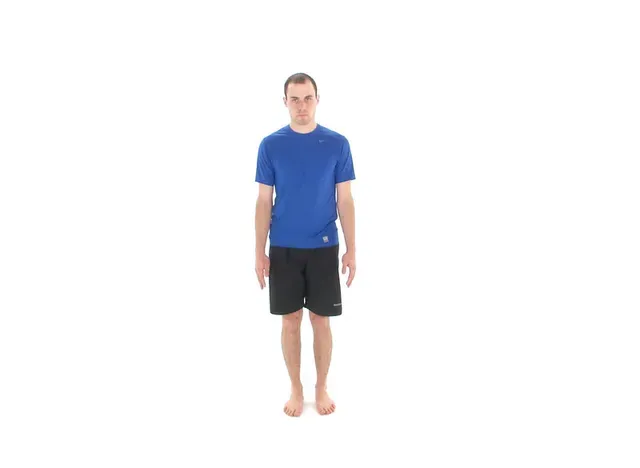
Step 2: Look in front of you as much as possible when you move.

Benefits:
- It engages the muscles responsible for lateral movements, such as the peroneus longus, which are crucial for stabilizing the ankle.
- It improves ankle mobility and flexibility, contributing to overall joint health.
- It also boosts proprioception - the body's ability to sense joint position - thereby reducing the risk of ankle injuries.
» Check your ankle pain symptoms and find out why it hurts
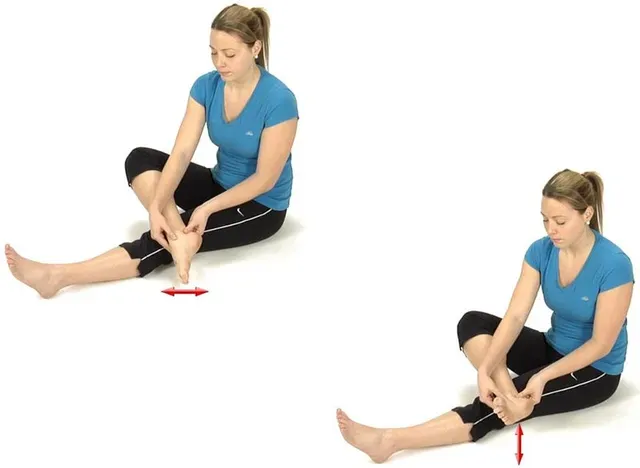
6. Ankle Mobilization
Sets: 3
Repetitions: 10
Step 1: In long sitting: Point the foot then lift toward you. Make the sole face inward then outward.
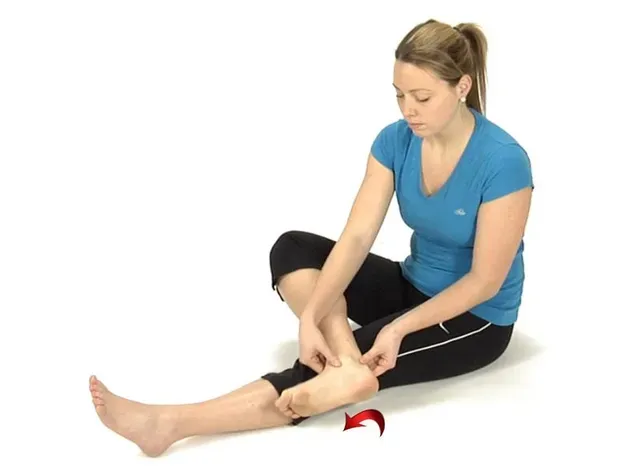
Step 2: Rotate the ankle in both directions.
Benefits:
- It improves joint flexibility and range of motion, contributing to better muscle activation and coordination around the ankle joint.
- It alleviates pain and stiffness, facilitating a more effective and comfortable strengthening process.
» Learn how to fix overpronated ankles, also known as flat feet
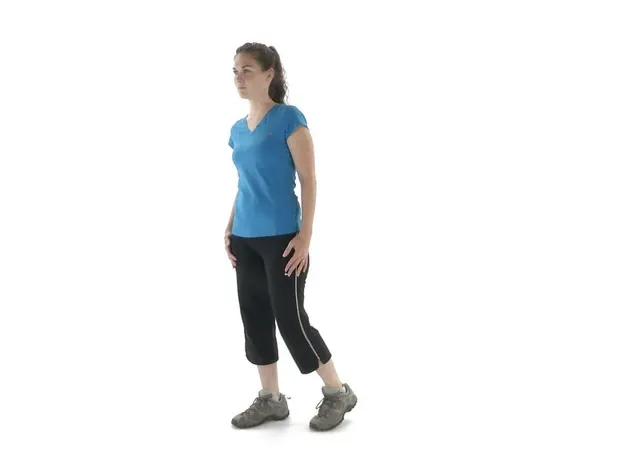
7. Ankle Circles
Sets: 3
Repetitions: 10
Step 1: In standing, lift one foot off the ground so only the toes touch the floor and rotate the ankle in both directions.
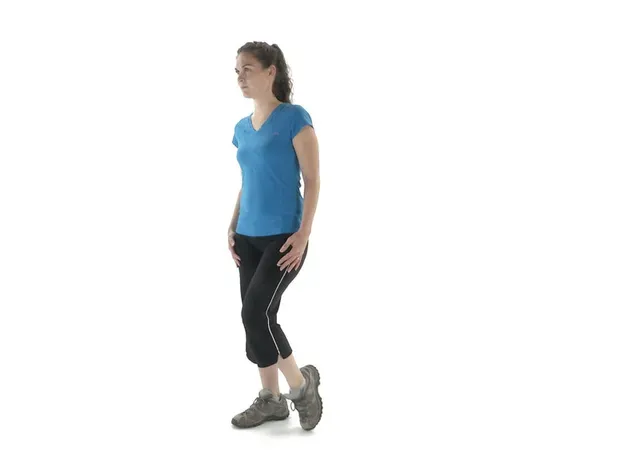
Step 2: Repeat with the other foot.
Benefits:
- It improves joint flexibility by engaging multiple planes of motion, boosting ankle mobility.
- It makes better muscle activation and coordination possible, contributing to stronger and more stable ankles.
- It improves proprioception - the body's ability to sense its position in space - reducing the risk of injuries like sprains.
» Does your foot roll outwards? Learn exercises to correct supination
8. Ankle Rolls (Side to Side)
Sets: 3
Sets: 10
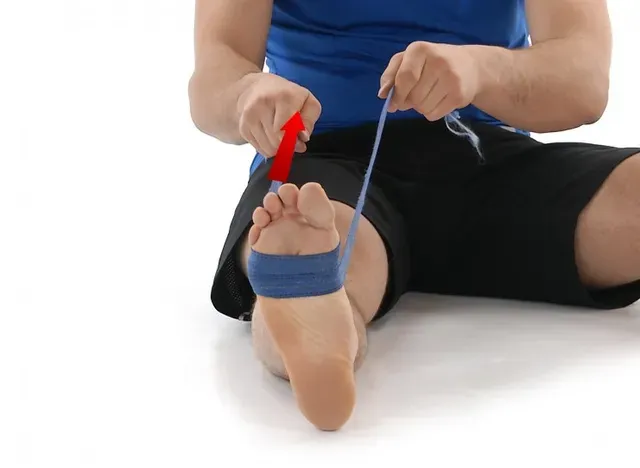
Step 1: Sit with your legs straight and with a belt or towel tied around your foot.
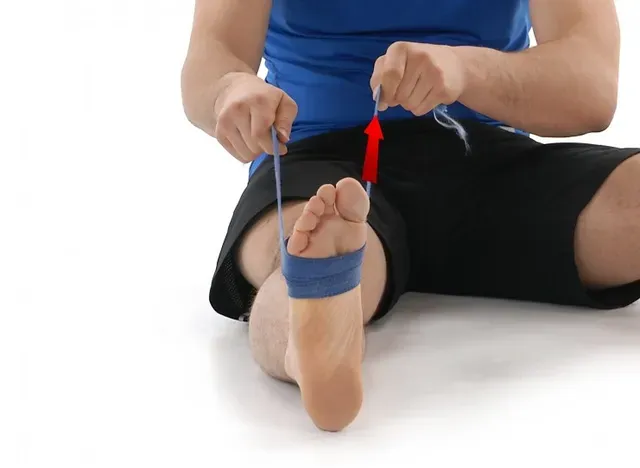
Step 2: By pulling on one end of the belt, move your sole towards the outside and then to the inside as far as you can. Maintain the position and repeat.
Benefits:
- It improves joint stability, reducing the risk of injuries such as sprains.
- It boosts proprioception - the body's ability to sense joint position - improving balance and coordination.
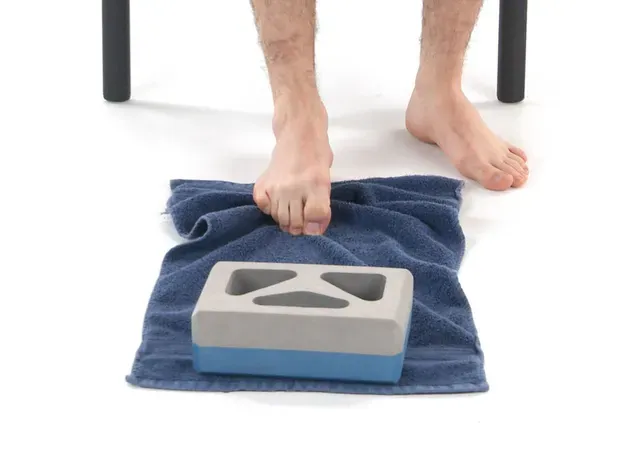
9. Toe Curls
Sets: 3
Repetitions: 15
Step 1: Sitting with the feet shoulder-width apart, curl your toes into the ground or a soft surface.
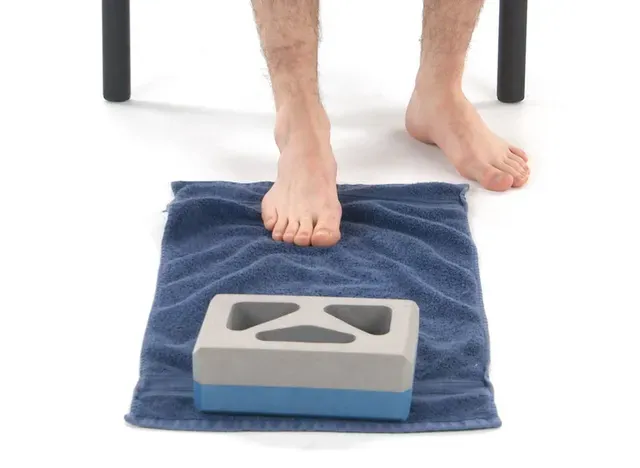
Step 2: Hold for 5 seconds and release. Be sure to repeat on the other foot.
Benefits:
- It strengthens the intrinsic muscles of the feet, enhancing arch support and overall foot stability, which indirectly stabilizes ankles.
- It can help reduce or prevent pain from foot injuries, such as plantar fasciitis.
- It keeps the ankle joint stable, relieve pain, and prevent further injury.
» Read our detailed guide on the anatomy of your foot
10. Heel Raises
Sets: 3
Repetitions: 10
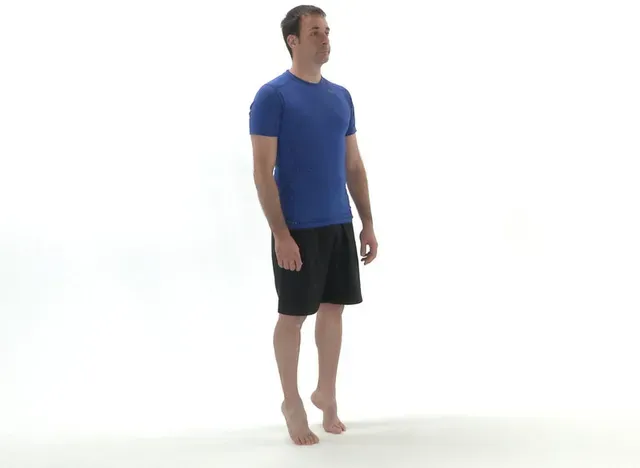
Step 1: Stand upright and raise on the tip of your toes.
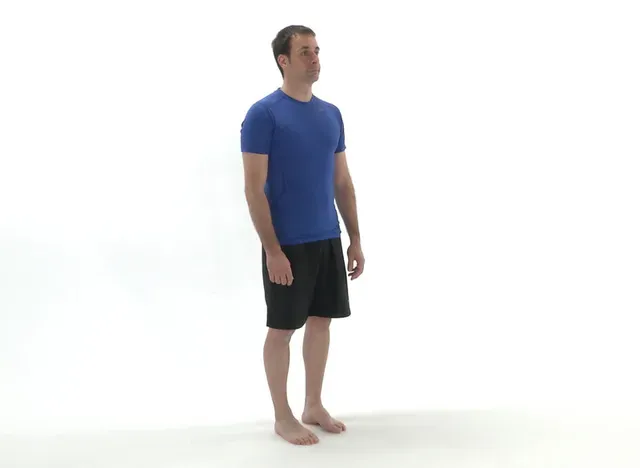
Step 2: Lower yourself and repeat.
Benefits:
- It strengthens the calf muscles and Achilles tendon, improving ankle stability and power for activities like running and jumping.
- It boosts plantar flexion contributes to better balance and reduces the risk of injuries by supporting proper foot mechanics.
- It also improves overall foot and ankle flexibility, benefiting daily movements and athletic performance.
» Find out exercises to relieve the pain in the ball of your foot
11. Calf Stretches
Sets: 3
Repetitions: 15
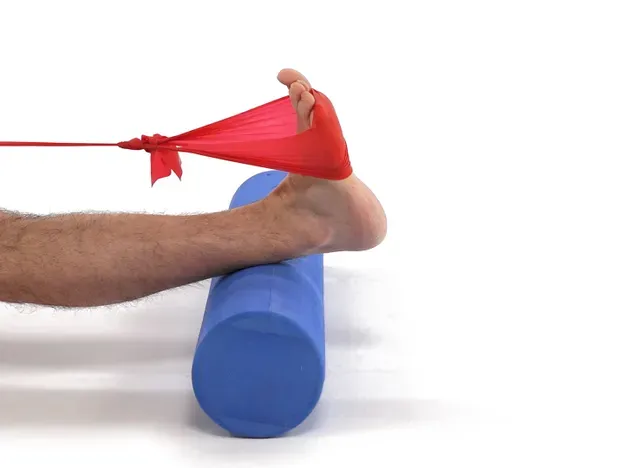
Step 1: Place one end of a band or tubing around the foot and hold the other end with your hands.
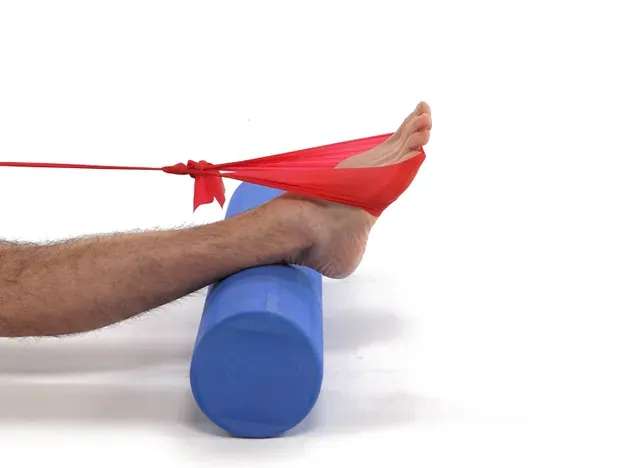
Step 2: Push the foot in the band. Make sure that your knee is slightly flexed and your ankle is elevated by a softball, foam roller, or similar.
Benefits:
- It strengthens the ankle by targeting key muscles responsible for pointing the toes downward, such as the gastrocnemius and soleus.
- It boosts muscle strength and stability, which is crucial for activities like walking, running, and jumping.
- It improves plantarflexion strength also contributes to better balance and reduces the risk of ankle injuries.
» Learn about the benefits of arch support and how it can relieve pain
12. Muscle Plantar Fascia
Sets: 3
Repetitions: 15
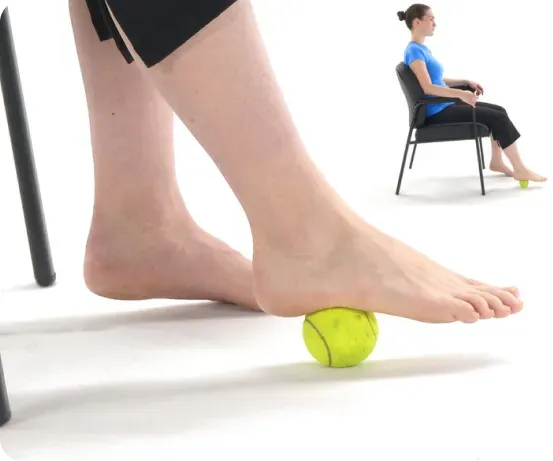
Step 1: Sit on a straight-back chair with one foot on a tennis ball, the other foot flat on the floor, and you back in a neutral position (slightly arched).

Step 2: Lightly roll the ball under your arch of the foot. You are trying to lightly stimulate the muscles so do not press too hard.
Benefits:
- It aids in proper weight distribution and shock absorption during walking and running.
- It contributes to overall foot stability, which indirectly helps in strengthening and stabilizing the ankle joint.
Risks of Exercising Injured or Weakened Ankles
For the most part, exercises for strengthening your ankles are safe. It is important not to exercise and stretch your ankle if you are experiencing any adverse symptoms of inflammation or pain.
Refrain from doing ankle strengthening exercises after a sprain or if you have bruising. It is advised to apply ice to reduce inflammation and rest for a week or two before attempting to start ankle exercises. Exercises should limit the provocation of pain through slow and controlled movements.
If pain arises, stop exercising and apply the RICE (Rest, Ice, Compression, and Elevation) method to your ankle. Refrain from doing overly challenging exercises too soon after an injury, as this may cause your symptoms to arise again or expose you to the risk of getting injured again.
» Check out the most common hiking injuries
When to See a Medical Professional
If you cannot bear weight on the ankle for a couple of days after your injury, consult with a medical professional, as this could indicate a more serious injury in the area.
You should seek advice from a medical professional should your ankle feel unstable when weight is placed onto the leg during exercise or if the ankle pain does not subside. Other forms of medical management can be considered to prevent complications from developing in the ankle.